There was a time when buying a flagship smartphone meant spending a lot of money, but at least you knew exactly what you were paying for.
You were getting the best processor, the best cameras, a premium display, excellent build quality, and features that would remain competitive for years.
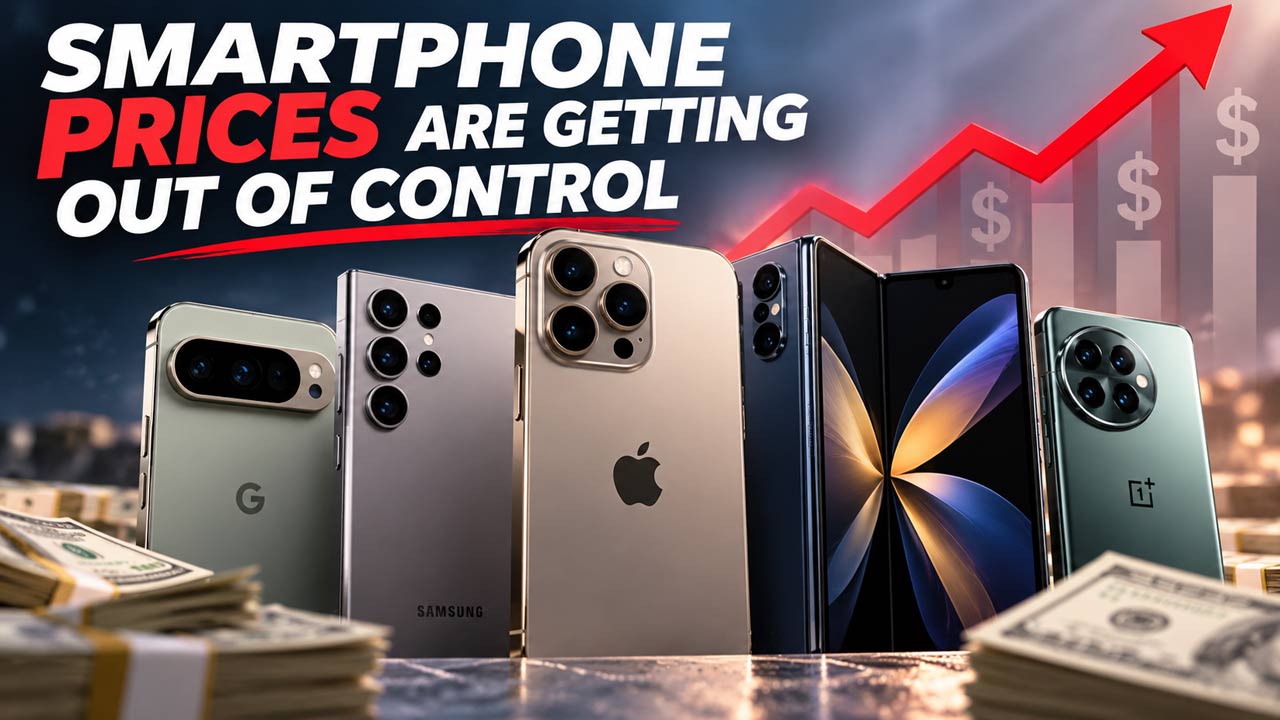
Today, that equation is becoming harder to justify. Smartphone prices have steadily climbed across the premium segment, with manufacturers pushing increasingly expensive models while also introducing even more premium tiers above their traditional flagships.
The result is a smartphone market where spending $1,000 is no longer considered particularly extravagant, and some of the most advanced phones now sit comfortably above $1,500.
The bigger question isn’t simply why phones are becoming more expensive. It’s whether the improvements we’re getting are keeping pace with those price increases.
The $1,000 Smartphone Has Become Normal
The biggest change in the smartphone market is how quickly $1,000 phones went from being luxury products to being relatively normal.
Apple, Samsung, and Google have all established premium smartphones around or above this price range, while foldables have pushed pricing even further.
The $1,000 mark that once represented the absolute top of the smartphone market is now effectively the starting point for several premium devices.
For consumers, this changes expectations. A phone costing $1,000 should feel exceptional in virtually every category. Yet manufacturers increasingly reserve certain features for even more expensive models.
You might get a fantastic camera system, but not the company’s best camera. You might get a flagship processor, but the more expensive model gets a larger cooling system or additional hardware.
You might get a premium display, but the Ultra or Pro Max version gets the bigger and brighter panel.
The premium market is increasingly divided into multiple levels.
Ultra, Pro, Pro Max and Ultra Pro Are Changing the Market
One of the easiest ways manufacturers have increased smartphone prices is by expanding their product hierarchy.
Instead of selling one flagship phone, companies now offer multiple premium variants.
There is the standard model, followed by Pro, Pro Max, Ultra, or another premium designation. Each step upward can add hundreds of dollars to the price.
This strategy makes the most expensive phone appear like the ultimate version of the product. But it also has another effect: it gradually makes $1,200-$1,500 smartphones feel normal.
A few years ago, spending that much on a phone would have been considered excessive by most consumers. Today, it is treated as simply the price of getting the absolute best version.
Foldables Have Made the Situation Even Worse
Foldable phones deserve a special mention because they have created an entirely new premium category.
The technology is genuinely impressive. Manufacturers have to fit flexible displays, complicated hinges, additional structural components, and specialized software into relatively thin devices.
But the technology comes with a price. Many flagship foldables cost much more than conventional premium smartphones.
The problem is that buyers are sometimes paying dramatically more for a device that can still have compromises in areas such as cameras, battery life, weight, or durability.
For consumers who genuinely need the larger folding display, those compromises may make sense.
For everyone else, it raises an uncomfortable question: are we paying for useful innovation or simply paying a premium for something new?
Hardware Improvements Are Getting Smaller
The smartphone industry has reached a point where hardware improvements are becoming more and more incremental.
A modern flagship already has an excellent OLED display. It already has a fast processor. It already takes excellent photographs. It already supports fast connectivity, wireless charging, and advanced computational photography.
That makes meaningful improvements much harder.
A new processor might be 15% faster. A camera sensor might perform better in low light. A display might become brighter. Battery life might improve by a few hours.
Those are useful improvements, but they don’t necessarily transform the smartphone experience.
And when the price increases by hundreds of dollars, consumers naturally start asking whether the upgrade is actually worth it.
AI Is Becoming the New Excuse for Premium Pricing
Artificial intelligence is now one of the biggest themes in smartphone marketing.
Manufacturers are adding AI-powered photo editing, translation, writing assistance, search features, voice assistants, and sophisticated on-device processing.
Some of these features are genuinely useful. However, AI also gives smartphone companies another way to differentiate expensive devices.
Features that could potentially run on a wide range of modern hardware can become selling points for newer premium models.
The danger is that AI becomes another buzzword used to justify yearly upgrades rather than a genuinely transformative improvement to the smartphone experience.
The Real Problem Is the Upgrade Cycle
Perhaps the biggest problem isn’t that expensive smartphones exist.
It’s that manufacturers have convinced consumers that upgrading every year is normal.
A three-year-old flagship can still be extremely fast. Its display is still excellent. Its cameras are still capable. It can run modern applications and games.
In many cases, it remains more than good enough for everyday use. That makes the yearly upgrade difficult to justify.
When a phone costs $1,200 or more, consumers shouldn’t feel pressured to replace it after 12 months simply because a newer model has arrived.
Longer software support has helped address this problem. Samsung, Google, and Apple have all pushed longer update policies, making it more realistic to keep a premium phone for several years.
Ironically, that could be one of the best things happening in the smartphone industry.
Mid-Range Phones Are Getting Surprisingly Good
The good news is that consumers don’t necessarily have to participate in the premium-price race.
The mid-range smartphone market has become dramatically better.
Phones costing several hundred dollars can now offer high-refresh-rate OLED displays, capable processors, good cameras, fast charging, and attractive designs.
Brands such as Xiaomi, OnePlus, Nothing, Motorola, Realme and others have pushed competition in this segment, forcing the entire industry to deliver more hardware for less money.
For many people, a $400-$600 smartphone can provide almost everything they actually need.
That makes the $1,200 flagship even more difficult to justify unless someone specifically wants its best cameras, maximum performance, premium materials, specialized features, or longer support.
Companies Are Also Moving Toward More Expensive Premium Tiers
Another worrying trend is that companies aren’t simply increasing the price of their existing flagships.
They’re creating entirely new categories above them.
The traditional flagship becomes the “standard premium” model, while an Ultra or Pro Max becomes the aspirational product.
This creates a ladder where every price point encourages consumers to spend just a little more.
A $799 phone looks reasonable next to a $1,299 model. The $1,299 model looks reasonable next to a $1,599 model.
And suddenly a smartphone costing more than a high-end laptop doesn’t seem completely outrageous.
Smartphones Are Becoming More Like Luxury Products
At the highest end of the market, smartphones are beginning to resemble luxury consumer electronics.
Materials, camera systems, displays, titanium frames, specialized finishes, and exclusive features all contribute to a premium identity.
There is nothing inherently wrong with that. Luxury products have always existed, and consumers are free to spend their money however they choose.
The problem occurs when premium pricing becomes the default expectation rather than an option for enthusiasts.
A smartphone is still fundamentally a communication device. It is a camera, gaming machine, computer, navigation device, and entertainment system, but it is also something that many people replace every few years.
At some point, the economics become difficult to ignore.
The Smartphone Market Needs Real Innovation Again
The answer isn’t necessarily cheaper phones. What the industry needs is more meaningful innovation.
A phone becoming slightly faster every year isn’t enough. Increasing camera megapixels isn’t enough. Making the display marginally brighter isn’t enough.
Consumers need improvements that genuinely change how they use their phones.
Better battery technology would be huge. More durable foldable displays would matter.
Faster charging with better battery longevity would be useful. Smarter software that actually saves people time could justify an upgrade.
More repairable hardware could make expensive phones easier to own for longer. Those innovations would have a much more tangible impact than another incremental processor upgrade.
The $1,000 Question
The smartphone industry has reached an interesting point.
Phones have never been more capable, but flagship prices have also never been easier to question.
If a $1,200 smartphone lasts five years and provides a genuinely superior experience, its price can potentially be justified.
But if consumers are encouraged to replace it every year or two for relatively small improvements, the value proposition becomes much harder to defend.
The industry doesn’t necessarily have a smartphone price problem because expensive phones exist.
It has a problem when expensive becomes normal while meaningful innovation becomes incremental.
For consumers, the smartest response may simply be to stop treating every new flagship as an automatic upgrade.
Modern smartphones are already incredibly capable, and keeping a good phone for another year can sometimes be the biggest upgrade to your wallet.
The smartphone race isn’t slowing down anytime soon. The question is whether manufacturers can convince consumers that the next generation is worth the increasingly large price attached to it.