In today’s always-online world, your network is basically the backbone of everything you do. If you’re running a small business, managing enterprise infrastructure, or handling multiple client networks as an MSP, one slow connection or unexpected outage can spiral into lost revenue, angry users, and complete chaos. That’s where network monitoring software comes in.
Network monitoring tools give you real-time visibility into your infrastructure. They track uptime, bandwidth usage, latency, packet loss, device health, and sometimes even security threats. Instead of finding out something’s broken because someone yells at you on Slack, you see the problem coming and fix it before things go south.
This guide breaks down the best network monitoring software currently available, explaining what each does best, who they’re for, and how to choose the right one for your needs.
What Is Network Monitoring Software?
Network monitoring software is designed to continuously observe your network components like routers, switches, servers, firewalls, and connected devices. It collects performance data using protocols like SNMP, NetFlow, ICMP, and APIs, then turns that data into dashboards, alerts, and reports.
The goal is simple: maximum uptime and optimal performance. With the right tool, you can detect bottlenecks, troubleshoot issues faster, plan capacity upgrades, and maintain a smooth user experience across your entire network.
Why Network Monitoring Is More Important Than Ever
Modern networks are no longer simple. You’re dealing with cloud services, hybrid environments, remote workers, SaaS platforms, and security threats all at once. Manual monitoring just doesn’t cut it anymore.
Network monitoring software helps you stay ahead by giving you constant visibility, automated alerts, historical performance insights, and, in many cases, predictive analytics powered by AI. Instead of reacting to problems, you’re preventing them.
Best Network Monitoring Software You Can Use Today
LogicMonitor

LogicMonitor is one of the most powerful cloud-based network monitoring platforms available today. It’s fully SaaS, agentless, and designed to handle hybrid environments without breaking a sweat. The platform automatically discovers devices, applies monitoring templates, and starts collecting data almost immediately.
What really sets LogicMonitor apart is its scalability. From monitoring a few dozen devices to thousands across multiple locations, it stays fast and reliable. The dashboards are clean, customizable, and actually useful instead of being cluttered with noise.
LogicMonitor is best suited for mid-to-large organizations that want deep visibility without managing on-prem monitoring servers. The downside is pricing; it’s premium, and costs increase as your infrastructure grows.
Datadog
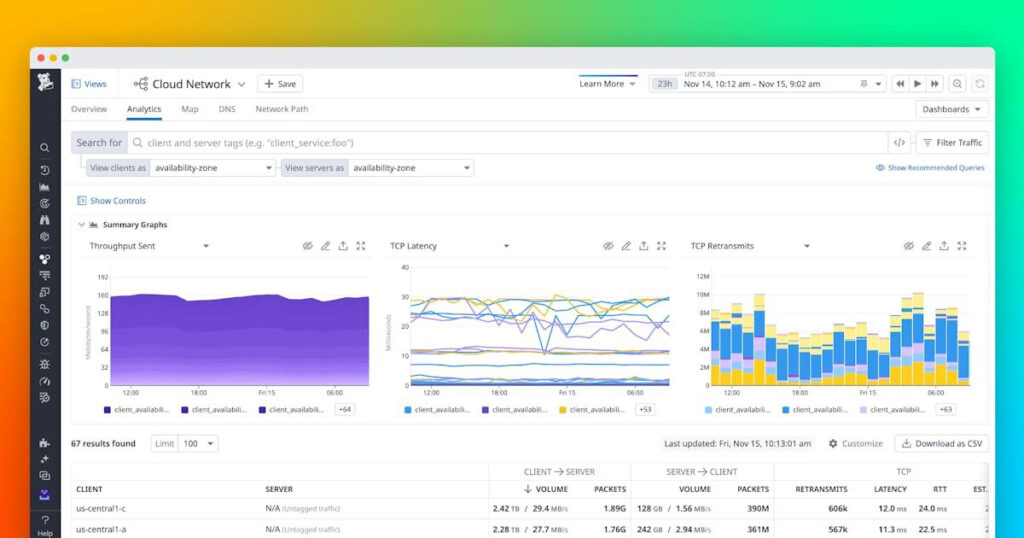
Datadog goes beyond traditional network monitoring and delivers full observability. It combines infrastructure monitoring, network performance monitoring, application performance monitoring, and logs into one ecosystem.
For cloud-native and hybrid setups, Datadog is very powerful. You can visualize traffic between services, track latency across regions, and correlate network issues with application performance in real time. This makes troubleshooting significantly faster.
However, Datadog uses usage-based pricing. If you’re not careful with metrics and retention settings, costs can rise quickly. It’s ideal for modern DevOps teams and cloud-heavy environments rather than simple on-prem networks.
SolarWinds Network Performance Monitor

SolarWinds Network Performance Monitor (NPM) is a classic enterprise-grade solution that has been around for years. It’s known for its rock-solid SNMP monitoring, intelligent alerts, and detailed network topology maps.
This tool excels in traditional on-prem and large corporate networks. Features like NetPath help you visualize traffic paths and pinpoint where latency or packet loss occurs. It’s extremely detailed and battle-tested.
That said, SolarWinds NPM is on-prem software, meaning setup and maintenance require more effort. It’s powerful but not as cloud-native or lightweight as newer SaaS tools.
PRTG Network Monitor

PRTG Network Monitor is known for its sensor-based approach. Each sensor monitors one specific metric, such as bandwidth usage, CPU load, or ping response time. This makes it extremely flexible and customizable.
PRTG is a great choice for small to medium-sized businesses because it’s easy to deploy and offers both on-prem and cloud options. The interface is clean, alerts are reliable, and reporting is straightforward.
The main downside is licensing. As your network grows, the number of sensors increases fast, which can make pricing harder to predict.
Auvik

Auvik is built with MSPs and IT teams in mind. It offers automatic network discovery, real-time topology mapping, configuration backups, and performance monitoring, all delivered through the cloud.
Its biggest strength is simplicity. You get deep visibility without spending hours on setup. Network maps update automatically, and alerts are smart enough to avoid constant noise.
Auvik’s per-device pricing can be expensive for large networks, but for managed service providers, the time saved often makes it worth it.
Dynatrace

Dynatrace takes network monitoring to the next level with AI-driven observability. It doesn’t just tell you something is wrong; it analyzes root causes and shows how network issues impact applications and user experience.
This makes Dynatrace perfect for enterprises running complex, distributed systems. The AI engine reduces alert fatigue and speeds up troubleshooting dramatically.
However, Dynatrace can feel overwhelming for smaller teams. It’s powerful, but it comes with a learning curve and enterprise-level pricing.
Open-Source Network Monitoring Tools
Zabbix, Nagios, and LibreNMS are popular open-source options for teams that want full control without licensing costs.
These tools are extremely flexible and backed by strong communities. You can customize almost everything, integrate with third-party tools, and scale as needed. The trade-off is that time, setup, tuning, and maintenance require solid technical knowledge.
How to Choose the Right Network Monitoring Software
Choosing the right tool depends on your environment and priorities. If you want fast deployment and minimal maintenance, cloud-based SaaS tools are the move. If you need full control and customization, on-prem or open-source tools might suit you better.
Think about network size, budget, alerting needs, reporting depth, and future growth. A tool that fits today but can’t scale tomorrow will cause problems down the line.
Final Thoughts
Network monitoring software isn’t optional anymore; it’s essential. The right solution helps you stay proactive, reduce downtime, and keep everything running smoothly, even as your infrastructure grows more complex.