Data is everywhere. Your apps, your users, your analytics dashboards, your backups, your AI models, everything runs on data. And if that data isn’t managed properly? Yeah… things get messy fast.
That’s where Data Management Software steps in. These tools help you store, organize, integrate, secure, and analyze data without chaos. This is a guide on what data management software actually does, why it matters, and the best platforms you can use right now, with real-world use cases.
What Is Database Management Software?
Data management software is basically the brain and memory of your business, handling everything from how data is collected across multiple sources to how it’s stored securely, organized into usable structures, cleaned, maintained, and finally accessed for analytics, applications, or reporting.
Without proper data management in place, your data quickly becomes scattered across different tools, duplicated, outdated, or flat-out incorrect, and when your data is bad, the decisions built on top of it usually are too.
Modern data management platforms go far beyond simple databases, offering powerful features like cloud-based storage, real-time analytics, automation, strong governance controls, AI integrations, and the ability to scale effortlessly as your data grows.
Why do you need Data Management Software?
Let’s be real, data volumes are exploding, and you’re no longer just dealing with one clean database. You’re handling user behavior data, transaction records, system logs, events and metrics, AI training datasets, and data coming in from a bunch of third-party integrations all at once.
Trying to manage all of this manually or with outdated tools is a guaranteed headache and a fast track to broken reports, slow systems, and bad decisions. This is where good data management software becomes a lifesaver.
It helps you scale without things falling apart, keeps your data accurate and reliable, ensures you meet security and compliance requirements, and allows you to run faster analytics and reporting.
On top of that, it enables you to build smarter, more data-driven products. In short, it stops your data from turning into useless digital junk and turns it into something you can actually trust and use.
The Best Data Management Software Right Now
Snowflake – Best Overall Cloud Data Platform

Snowflake is easily one of the most popular data platforms right now, and for good reason. It’s a cloud-native data warehouse designed for analytics, big data workloads, and modern business intelligence.
What makes Snowflake different is how it separates storage and compute, letting you scale each independently. That means you don’t pay for power you’re not using, and performance stays consistent even as data grows.
It supports structured and semi-structured data like JSON and Parquet, works across AWS, Azure, and Google Cloud, and integrates smoothly with most BI tools.
Snowflake is perfect if analytics is your top priority and you want something powerful without heavy infrastructure management.
Google BigQuery – Best for Serverless Analytics
BigQuery is Google’s fully serverless data warehouse, and it’s built for speed and simplicity. There are no servers to manage, no clusters to tune; you upload data, run queries, and get results fast.
Its pay-per-query pricing model works great if your workload is analytics-heavy but not constant. BigQuery also integrates deeply with Google’s AI and machine learning ecosystem, making it a strong option for data science teams.
If you’re already on Google Cloud or want powerful analytics without infrastructure stress, BigQuery is a solid pick.
Microsoft Azure Data Lake & Synapse – Best for Microsoft Ecosystem

Azure Data Lake, combined with Azure Synapse Analytics, gives you a full enterprise-grade data management solution. It’s designed to handle massive datasets, advanced analytics, and seamless integration with Microsoft tools like Power BI and Azure AI.
Security, compliance, and governance are major strengths here, which is why a lot of large enterprises trust it. If your organization already lives in the Microsoft ecosystem, this combo is extremely powerful.
Oracle Database – Best for Mission-Critical Systems
Oracle Database is still a monster in the enterprise world. It’s known for reliability, strong transactional support, and performance under heavy workloads.
Banks, telecom companies, and government systems still rely on Oracle for a reason: it’s battle-tested and very robust. While it’s not the most developer-friendly or affordable option, it shines where uptime and consistency are non-negotiable.
SAP HANA – Best for Real-Time Analytics
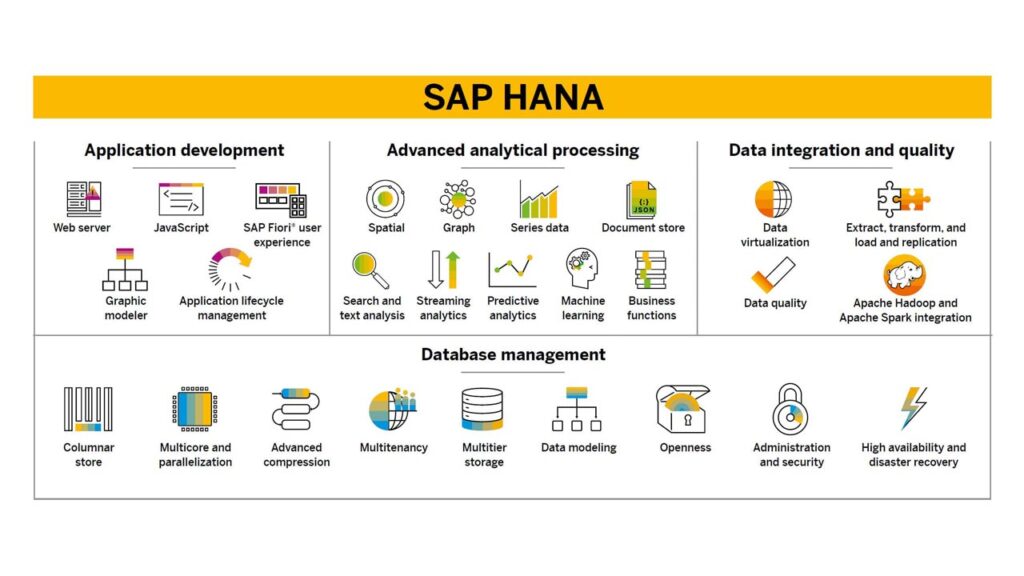
SAP HANA is an in-memory database, meaning it processes data directly in RAM instead of disk. The result is extremely fast queries and real-time analytics.
It’s especially popular with organizations already using SAP applications. HANA is powerful but resource-heavy and expensive, making it best suited for large enterprises that need real-time insights at scale.
MongoDB – Best for Flexible, Modern Applications
MongoDB is a NoSQL, document-based database that developers love. Instead of rigid tables, it stores data in flexible JSON-like documents, making it ideal for rapidly evolving applications.
It’s great for handling unstructured or semi-structured data, scaling horizontally, and supporting modern app development. While it’s not meant for heavy analytics on its own, it’s perfect for operational workloads and fast-moving products.
Informatica – Best for Enterprise Data Governance
Informatica focuses on data integration, quality, governance, and metadata management. It’s not a database; it’s the glue that connects all your data systems.
Large organizations use Informatica to ensure data accuracy, consistency, and compliance across dozens (or hundreds) of systems. It’s powerful but complex, so it’s best for enterprises with dedicated data teams.
Talend Data Fabric – Best Open-Core Integration Platform
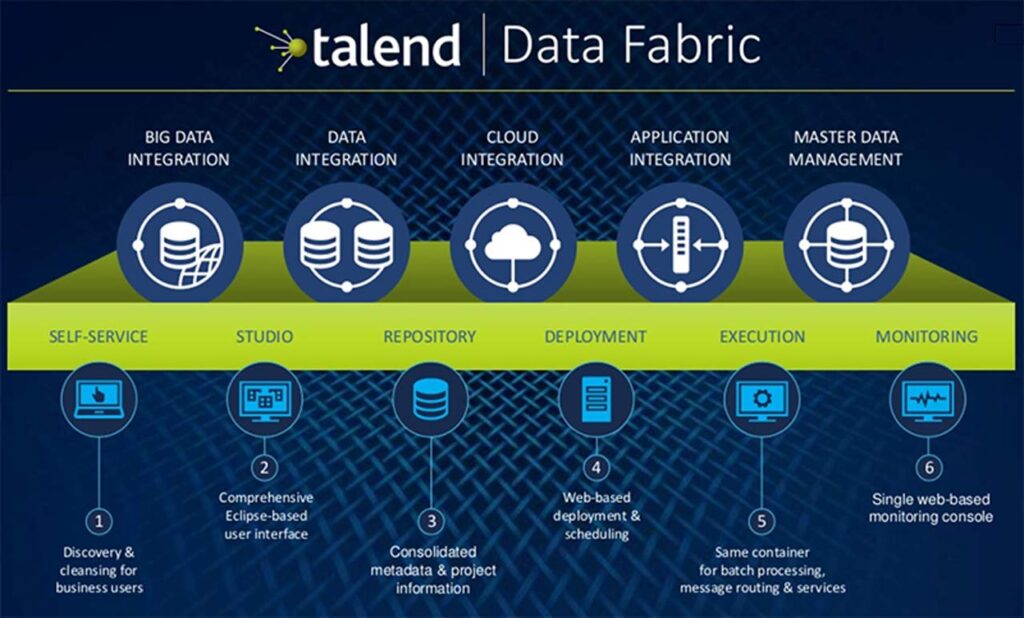
Talend is known for its open-core approach to data integration and management. It offers ETL, data quality, governance, and cloud integration tools in one ecosystem.
It’s more accessible than Informatica and works well for teams that want flexibility without fully locking into enterprise pricing from day one.
How to Choose the Right Data Management Software
Choosing the best data management platform isn’t about chasing hype or picking the most popular name; it’s about finding the right fit for your actual needs. If analytics and large-scale querying are your top priorities, platforms like Snowflake or BigQuery are hard to beat because they’re built specifically for fast, scalable analysis.
If your organization already relies heavily on Microsoft tools, Azure Data Lake feels like the most natural and efficient choice. For teams building modern applications that need flexible schemas and rapid development, MongoDB stands out as the clear winner.
On the other hand, if data governance, compliance, and strict control are critical, especially in regulated industries, Informatica or Oracle make far more sense.
Beyond features, you should also think about how large your data is today and how fast it’s growing, whether you prefer cloud-based or on-premise solutions, how much you’re willing to spend long term, and whether your team has the skills needed to manage and scale the platform effectively.
The tools listed here are the best in the game right now, each dominating its own lane. Pick the one that matches your goals, not just the biggest name.