How GameStop and Other Retailers Will Be Affected by PlayStation’s Move Away From Physical Game Discs

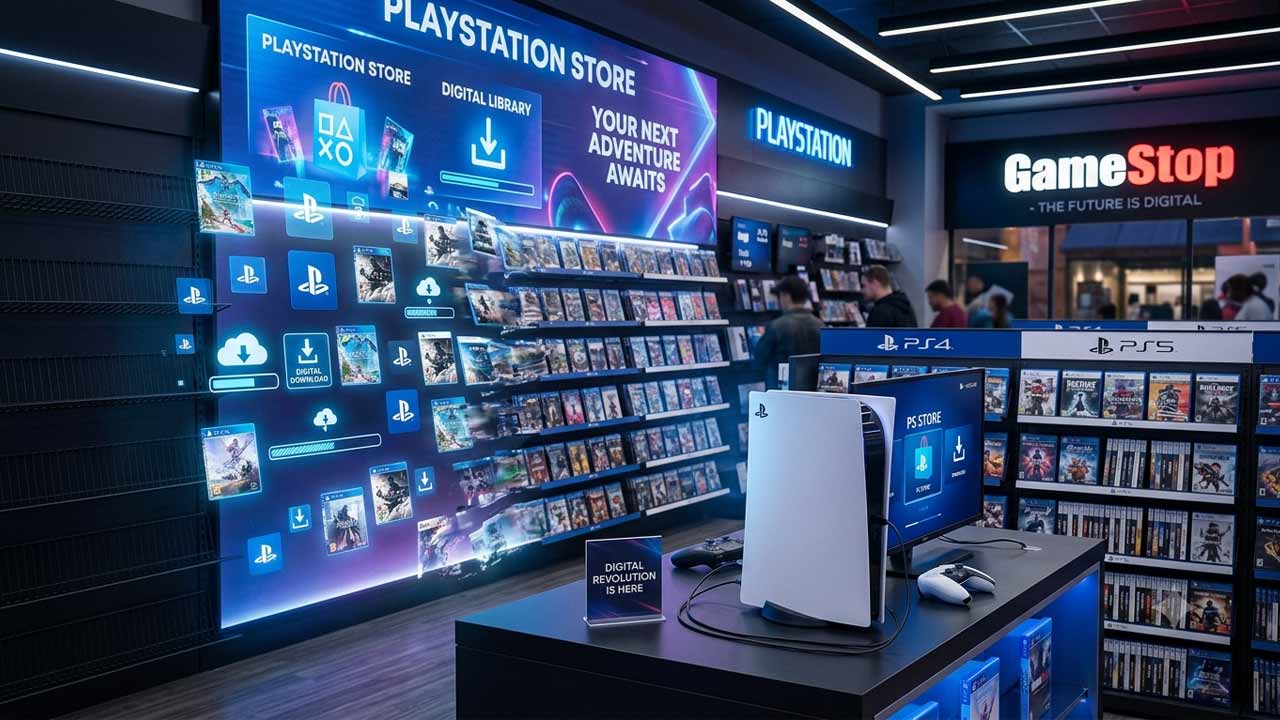
PlayStation’s decision to move toward a digital-only future marks one of the biggest changes the gaming industry has seen in decades.
With future PlayStation consoles will no longer include physical game disc drives as standard and have abandoned discs entirely; traditional game retailers face an uncertain future.
While digital downloads have been steadily growing for years, physical games have remained an important part of the business for retailers like GameStop, Best Buy, Walmart, Target, and countless independent game stores.
A world where PlayStation games are sold almost exclusively through the PlayStation Store would fundamentally change how these businesses operate.
For some retailers, this shift could accelerate an already difficult transition. For others, it may force a complete reinvention of their business model.
GameStop Faces Its Biggest Challenge Yet
No company stands to lose more than GameStop. For years, GameStop’s core business has revolved around selling new physical games, buying used titles from customers, and reselling them at a profit.
The used-game market has long been one of the company’s biggest revenue generators because every traded-in game can be sold multiple times.
When PlayStation eliminates physical discs in 2028, that entire ecosystem disappears.
Digital purchases cannot be traded in, sold, or shared in the traditional sense. Once a player buys a digital game through the PlayStation Store, it remains permanently tied to their account.
That means no used PlayStation games, no trade-ins, and no opportunities for GameStop to earn revenue from second-hand sales.
The company has already been adapting by expanding into collectibles, PC gaming hardware, trading cards, and gaming accessories, but losing one of the industry’s largest physical game markets would be another significant blow.
The Used Game Market Could Shrink Dramatically
One of the biggest casualties of an all-digital future would be the second-hand games market.
Millions of gamers rely on used copies to save money. A blockbuster game that launches at full price often becomes significantly cheaper on the used market within a few months.
Without physical media, players lose that option entirely.
Instead, players become dependent on digital sales and promotions controlled by platform holders.
While PlayStation frequently discounts games during seasonal events, you no longer have the freedom to shop around different retailers for the best deal or purchase pre-owned copies.
This gives Sony greater control over pricing while reducing competition in the marketplace.
Retailers Lose One of Their Biggest Traffic Drivers
Physical game launches have traditionally brought customers into stores.
Midnight launches, preorder pickups, collector’s editions, and day-one purchases encourage shoppers to visit retailers.
Once inside, they often buy accessories, controllers, gaming headsets, gift cards, snacks, or other electronics.
Without physical PlayStation releases, that foot traffic naturally declines.
Retailers would lose one of the easiest ways to bring gamers into stores several times each year.
Collector’s Editions Will Need to Evolve
Collector’s Editions have become increasingly popular, featuring statues, art books, steelbooks, soundtracks, maps, and other premium items.
However, many editions currently include a physical game disc. In a digital-only future, publishers would likely shift toward including downloadable game codes instead.
Some recent Collector’s Editions have already taken this approach, offering an empty steelbook case alongside a digital voucher.
While dedicated fans may still purchase premium editions, some collectors feel that receiving a digital code instead of a physical disc reduces the long-term value of the package.
Retailers will need to rethink how they market these premium products when physical media disappears.
Big Box Retailers Can Adapt More Easily
Unlike GameStop, major retailers such as Walmart, Target, and Best Buy are not dependent on physical game sales alone.
Gaming represents only a small portion of their overall business.
Even if PlayStation discs disappear, these stores will continue selling gaming hardware, controllers, storage upgrades, monitors, televisions, gaming chairs, PC components, and gift cards.
The impact would certainly be noticeable, but it would not threaten their overall business in the same way it could affect specialist gaming retailers.
Independent Game Stores Could Feel the Pressure
Local game shops often rely heavily on physical media.
Many smaller retailers survive through buying, selling, and trading used games while building loyal communities around retro gaming.
If PlayStation abandons discs, independent stores lose an important revenue stream.
They may shift their focus toward retro consoles, Nintendo products, Xbox collectibles, tabletop games, Pokémon cards, gaming merchandise, PC hardware, or repair services.
Digital Gift Cards Become More Important
One category that is likely to grow is digital currency. Retailers already sell PlayStation Store gift cards, subscription cards, and digital game vouchers.
As digital purchases become the norm, these products become more valuable for both consumers and retailers.
Although profit margins are generally much lower than selling physical games, digital currency still gives retailers a way to participate in the PlayStation ecosystem.
Accessories Could Become the New Focus
If physical software sales decline, retailers will likely invest more heavily in gaming accessories.
Products such as DualSense controllers, charging docks, SSD upgrades, headsets, gaming monitors, keyboards, mice, racing wheels, VR accessories, and console storage solutions could become even more important revenue sources.
Gaming hardware typically offers healthier profit margins than new physical games, making it an attractive area for retailers looking to offset declining software sales.
Consumers Also Lose Some Benefits
The disappearance of physical discs doesn’t just affect retailers; it changes the ownership experience for players.
Physical games can be shared with friends, sold after completion, collected on shelves, or preserved for years.
Many players also appreciate having the option to continue playing even if a title is removed from a digital storefront.
Digital purchases offer convenience, instant downloads, and no need to swap discs, but they also leave players with fewer ownership rights and less flexibility.
As more of the industry embraces digital distribution, this debate is likely to become even more prominent.
Could Nintendo Benefit?
If Nintendo continues supporting physical game cards for future hardware while PlayStation moves entirely digital, it could strengthen Nintendo’s position among collectors and players who still value physical ownership.
Retailers would continue stocking Nintendo games to preserve at least part of the traditional game retail business.
Nintendo has historically maintained strong physical software sales, particularly for first-party titles that retain value over time.
However, whether Nintendo continues this strategy over the long term remains to be seen.
The Future of Game Retail
The gaming industry has been gradually moving toward digital distribution for more than a decade, and PlayStation’s latest direction suggests that transition is entering its next phase.
For retailers, the challenge isn’t simply selling fewer discs; it’s adapting to a future where software sales happen almost entirely online.
GameStop faces the greatest disruption because its business has long relied on physical games and the used-game market, while larger retailers have more diverse revenue streams to cushion the impact.
Physical games are unlikely to disappear overnight, and collectors, preservation advocates, and many players still value owning boxed copies.
Yet when PlayStation fully embraces a disc-free future in 2028, retailers will need to evolve faster than ever, focusing on hardware, accessories, collectibles, digital products, and new services to remain relevant in an industry where the traditional game aisle may become a relic of the past.