Whenever you plan to purchase a new laptop or build your own desktop PC, the first thing that comes to mind is a CPU (processor). And, you are most likely gonna end up asking yourself whether to choose an Intel CPU or an AMD CPU.
Now you see if you had this question in 2016 then the answer would be so simple. You could have easily picked out an Intel processor and would have been completely happy with its performance because Intel was way ahead of AMD back then. However, on 13th December 2016, AMD released their first ever Ryzen CPU line up and the tables were completely turned.
Ever since then, both companies have come a long way and so much improvisation is done to their processors. AMD and Intel both possess powerful CPUs for Desktop and laptops which can serve different needs like gaming and content creation.
With performance differences being very minor between AMD and Intel CPUs in 2022, it can be quite difficult to pick a winner. But, don’t worry we are up for the challenge. Let’s find out which CPU company is best in 2024.
Desktop CPU

Let’s start by comparing desktop CPUs first. AMD recently introduced the Ryzen 7000X3D series, including their flagship Ryzen 9 7950X3D. It uses the Zen 4 architecture enhanced with 3D V-Cache technology, featuring 16 cores and 32 threads. The base clock speed is 4.2GHz, with a boost clock of up to 5.7GHz.
AMD has historically excelled in core counts and multi-threaded performance, and with the addition of 3D V-Cache, their single-threaded gaming performance has also reached new heights. This innovation allows AMD to outshine its competition in gaming workloads, even with similar base clock speeds.
On the Blue team, Intel has introduced its 14th Gen Raptor Lake Refresh series, with the Core i9-14900K being the most powerful desktop processor. The i9-14900K features a total of 24 cores (8 Performance and 16 Efficient) and 32 threads.
The Performance cores have a base clock speed of 3.2GHz, with a boost clock reaching 6.0GHz, while the Efficient cores operate between 2.4GHz (base) and 4.3GHz (boost). This makes the i9-14900K the fastest consumer processor in terms of raw clock speed.
Power Consumption
The Ryzen 9 7950X3D has a TDP of 120W, much lower than the previous 7950X (170W), showcasing AMD’s commitment to energy efficiency. The Core i9-14900K, with a nominal TDP of 125W, often exceeds 250W under heavy workloads due to its hybrid architecture, which impacts thermals and overall efficiency.
Price
The Intel Core i9-14900K is priced at around $589, making it slightly more affordable than AMD’s flagship Ryzen 9 7950X3D, which is available for $699. While Intel offers better affordability, AMD’s pricing is justified by high performance and power efficiency.
Now let’s look at the benchmarks before we move on to the winner selection of this category.
Benchmark Comparison
PassMark Benchmark
- AMD Ryzen 9 7950X3D
- Single-thread: 4150
- Overall: 62,519
- Intel Core i9-14900K
- Single-thread: 4737 (+13%)
- Overall: 60,097 (-4%)
AMD costs 18% more but delivers 4% better multi-core performance while being more power efficient and optimized for gaming. However, Intel maintains its single-threaded performance lead, making it ideal for specific productivity tasks.
Winner: For gaming and multi-threaded tasks, AMD Ryzen 9 7950X3D takes the lead due to its cutting-edge technology and efficiency. However, for productivity and workloads requiring high single-threaded performance, Intel Core i9-14900K remains a strong content
This battle between AMD and Intel is far from over. We still have much to compare. So let’s go into the second category.
Laptop CPU
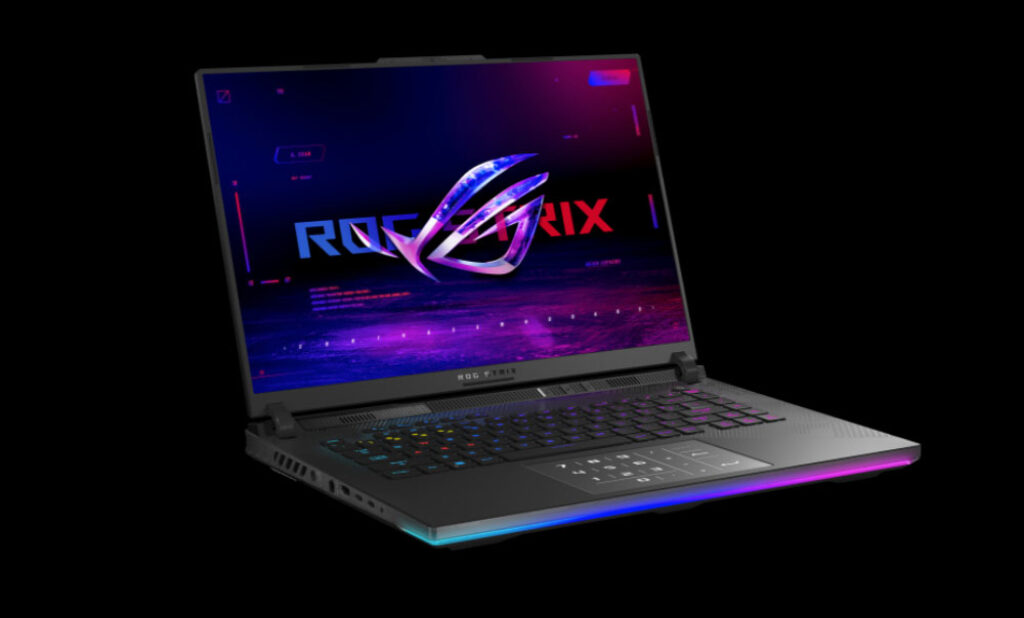
Desktop CPUs are simple to compare, you can just look at the raw performance because that’s what most matters there. But for Laptop CPUs performance alone won’t be enough they also have to be energy efficient.
On top of that third-party laptop manufacturers like Dell, HP, Lenovo, razor, and others also come in too. One of the laptop companies might get the most out of the particular CPU than the other. Anyway, we can still compare the specs and base performance for these CPUs. So let’s go and find out which Intel or AMD laptop processors are better.
Intel’s latest offering, the Core i9-14900HX, features 24 cores (8 performance and 16 efficiency cores) and 32 threads. It boasts a base clock of 2.2 GHz for performance cores, reaching up to 5.8 GHz with a turbo boost. Its TDP is configurable between 45W and 157W, depending on usage, and it supports DDR5 RAM for high-speed operations.
Intel’s HX processors continue to lead in raw single-core performance, crucial for tasks like gaming and certain productivity applications
AMD’s new Ryzen 9 7945HX, built on the Zen 4 architecture, offers 16 cores and 32 threads with a base clock of 2.5 GHz and a boost up to 5.4 GHz. Its TDP starts at 55W, similar to Intel’s HX lineup, but AMD emphasizes higher multi-core efficiency.
The 7945HX features integrated Radeon 610M graphics and advanced energy optimization, making it a strong competitor in multi-threaded tasks and long battery life scenarios
PassMark Benchmark
- AMD Ryzen 9 7945HX
- Single-thread: 4053
- Overall: 54,707
- Intel Core i9-14900HX
- Single-thread: 4305 (+6%)
- Overall: 45637 (-18%)
Intel’s i9-14900HX scores higher in single-threaded benchmarks, maintaining its lead over AMD in raw single-core speeds. This makes it ideal for games and certain productivity software. AMD’s Ryzen 9 7945HX excels in multi-threaded tasks, with benchmarks showing performance parity or superiority over Intel in rendering, video editing, and simulations.
Intel retains its edge in single-core tasks, but AMD has not only closed the gap in multi-core and energy efficiency metrics but has also exceeded Intel. The best CPU for you will depend on whether you prioritize single-thread performance (Intel) or multi-thread and efficiency (AMD). Do keep in mind that laptop design and thermal management by manufacturers also heavily influence performance.
What about the best Price/performance CPUs
We already talked about the raw performance of the CPUs. But what about the performance per dollar? AMD or Intel, which one provides the best performance for your money? Let’s find out.

Desktop – 5 best performances per price CPUs
- AMD Ryzen 5 4500 – 16,126 Points – $69(price) – 233.7(performance/dollar)
- AMD Ryzen 5 5500 – 19,395 Points – $83.49(price) – 232.3(performance/dollar)
- AMD Ryzen 5 5600 – 21,575 Points – $99.69price) – 216.4(performance/dollar)
- AMD Ryzen 5 5600X – 21,888 Points – $105price) – 208.5(performance/dollar)
- Intel Core i5-11600KF – 19,633Points – $97.5(price) – 201.4(performance/dollar)
Note: All prices and benchmarks are at the time of the creation of this article
As you can see there is only one intel processor among the Top 5 value for money CPUs which provides the best performance for the buck. So without any doubt, AMD is the winner here.
Laptop
You can’t compare laptop Processors based on their price because they are only available through laptop manufacturers. So, there isn’t much to compare here.
Availability
Let’s say you finally found a perfect processor for your PC, and it’s also within your budget, but what if it’s not available to purchase in the market? No matter how good the CPU is, it will become useless for you. That’s why it’s also important that CPUs are available for you to purchase in different markets.
We checked the availability of two current popular processors: AMD Ryzen 7 7800X3D and Intel Core i7-14700K. Both are well-regarded for their respective gaming and productivity performances.
- AMD Ryzen 7 7800X3D: This CPU has been highly sought after for its stellar gaming performance, thanks to its 3D V-Cache technology. However, it is currently difficult to find in stock in many markets due to high demand and limited restocks, as AMD prepares for the next generation. Scalpers and price hikes are also common issues for this model.
- Intel Core i7-14700K: Intel’s offering is relatively more available. Retailers have consistently stocked this CPU, ensuring accessibility for most buyers at its standard price point. It has a stable supply compared to AMD’s Ryzen 7 7800X3D.
In this round, Intel takes the edge for availability, as the AMD Ryzen 7 7800X3D remains harder to secure at reasonable prices due to ongoing stock shortages.
AMD vs Intel: which one is the best?
The choice between AMD and Intel depends on your specific needs:
- For desktop PCs: AMD is the winner for multi-core workloads and gaming performance), especially if you need high efficiency or are on a budget.
- For laptops: Intel is the clear choice for overall performance and efficiency, with better availability and integration in third-party systems.
- For price-conscious buyers: AMD still dominates in desktop price/performance, while Intel shines in laptops.
In 2024, there is no definitive “best” CPU brand overall, both AMD and Intel have their strengths tailored to different use cases. The decision ultimately comes down to your priorities: gaming, productivity, energy efficiency, or budget.