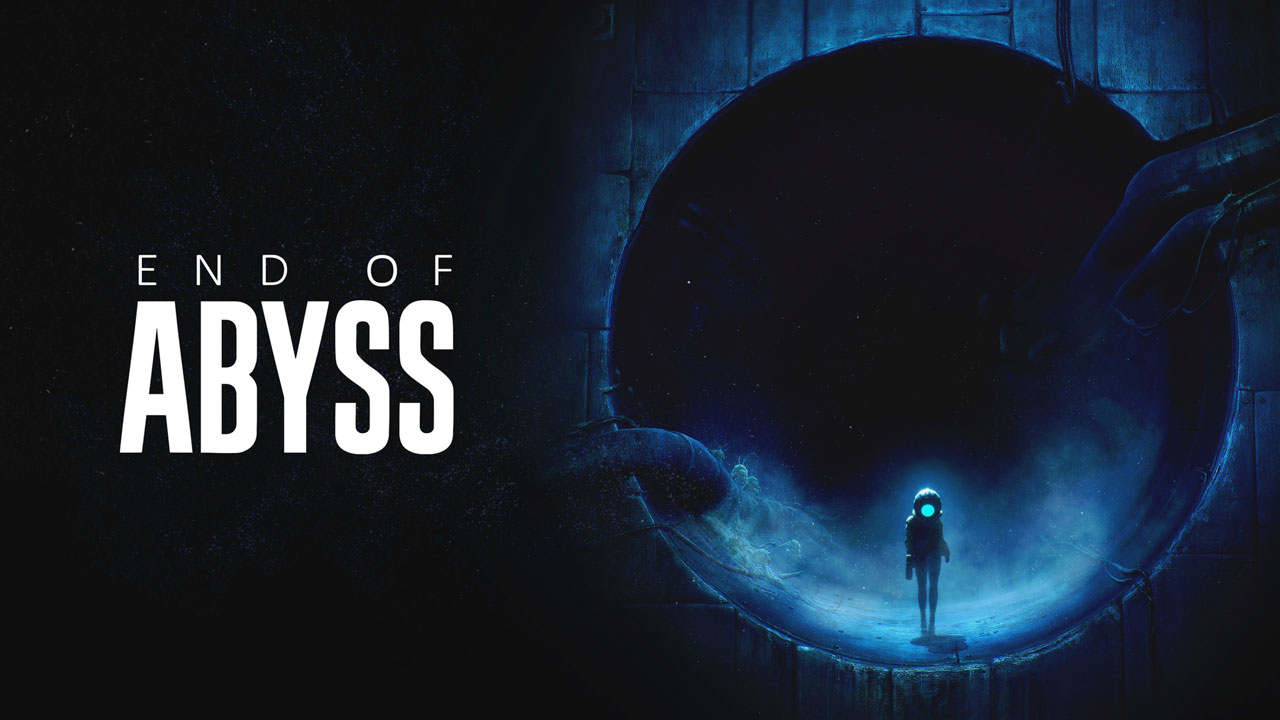
End of Abyss is the kind of game that immediately makes a strong first impression.
Its enormous underground facility, unsettling creature designs, oppressive lighting, and haunting soundscape create an atmosphere that is difficult to shake.
Developed by Section 9 Interactive, a studio founded by former Tarsier Studios developers, the game clearly carries some of the creative DNA associated with Little Nightmares, but its gameplay takes a very different direction.
Rather than being a cinematic horror adventure, End of Abyss combines survival horror with Metroidvania exploration and twin-stick shooter combat.
You play as Cel, a young combat technician who descends into a mysterious underground facility after something goes terribly wrong.
What begins as an investigation quickly turns into a fight for survival as Cel encounters mutated creatures, infected humans, and the remains of whatever happened inside the facility.
This is an ambitious debut that gets the atmosphere remarkably right, but struggles with some of the systems that surround it.
A Brilliant Horror Atmosphere
The biggest reason to play End of Abyss is its atmosphere. The underground facility feels enormous, abandoned, and hostile.
Long corridors disappear into darkness, machinery constantly reminds you that this place was once operational, and the silence is frequently interrupted by distant noises that make you wonder what is moving somewhere beyond the screen.
The game’s isometric perspective works surprisingly well for horror. You can see a reasonable amount of your surroundings, but never quite enough to feel completely safe.
Enemies can sit just outside your field of view, while dark corners and narrow corridors constantly create opportunities for something to surprise you.
This is effective because End of Abyss doesn’t rely on nonstop jump scares. Much of the tension comes from simply moving through the environment.
The sound design deserves special praise. Footsteps, machinery, dripping water, enemy noises, and weapon sounds all contribute to the feeling that the facility is alive.
The audio is one of the game’s strongest elements, and that matches the overall experience.
It is the kind of game where playing with headphones genuinely makes the experience better.
The Little Nightmares DNA Is Obvious
Section 9 Interactive was founded by three developers who previously worked at Tarsier Studios, and that history is immediately noticeable.
The visual design has the same fascination with grotesque creatures, oversized environments, and unsettling character proportions that made Little Nightmares so memorable.
But End of Abyss isn’t simply Little Nightmares with guns. Instead, it combines those visual influences with elements of Resident Evil, Dead Space, and traditional Metroidvania design.
This is a strange but effective combination. Cel looks small and vulnerable against the gigantic industrial complex, yet she is armed and capable of fighting back.
That balance is important. You’re not completely helpless, but the game rarely allows you to feel powerful.
Combat Is Fun, But Inconsistent
Combat uses twin-stick controls for Cel to move independently from where she aims.
The system is relatively straightforward, but it takes some time to become comfortable with, particularly when several enemies attack simultaneously.
The basic shooting feels satisfying, and the dodge mechanic gives combat a necessary sense of mobility.
Weapons and upgrades also provide some incentive to explore the facility beyond simply following the main objective. When combat works, it can be genuinely tense.
The problem is that some encounters don’t feel particularly well designed. There are repetitive encounters, cramped arenas, and difficulty spikes that can make certain fights more frustrating than frightening.
The difference is important. Good survival-horror combat makes you nervous because you don’t know what will happen next.
End of Abyss occasionally makes you nervous because you already know exactly what is coming, but the arena isn’t giving you enough room to deal with it. That’s not nearly as effective.
Exploration Is the Real Heart of the Game
If there’s one thing that defines End of Abyss, it’s exploration. The underground facility functions as one enormous interconnected environment.
As Cel obtains new equipment and abilities, previously inaccessible areas become available for you to revisit older sections and discover new routes, upgrades, and secrets.
This is where the Metroidvania structure works particularly well.
The facility looks like a genuine place rather than a collection of disconnected levels.
Unlocking shortcuts and discovering a previously inaccessible route can be satisfying because you gradually develop a mental picture of how everything connects.
The Scanner is also an important part of exploration. It can provide information about objects, enemies, and environmental elements while helping you understand what certain doors or mechanisms require. S
However, the game’s commitment to making exploration difficult occasionally goes too far.
The Map Can Become Your Worst Enemy
Metroidvanias live or die by their maps, and this is one area where End of Abyss receives some criticism.
The game wants you to become familiar with its environment, but there are moments when the map doesn’t communicate information as clearly as it should.
There are issues involving map indicators and locked doors, as well as confusing progression and frustrating backtracking.
Getting lost isn’t inherently bad. In fact, getting lost can be an important part of horror.
The problem occurs when you aren’t sure whether you’re lost because the game intentionally wants you to explore or because the game hasn’t communicated what you need to do.
That distinction becomes important later in the adventure.
The Story Keeps Too Many Secrets
The story follows Cel as she investigates the mysterious facility and attempts to understand what happened to the people who were stationed there.
End of Abyss doesn’t throw lengthy exposition at you. Instead, much of its worldbuilding is delivered through environmental details, documents, scanning, and scattered information.
That approach fits the atmosphere. Unfortunately, the narrative doesn’t always give you enough to work with.
Cel is a relatively passive protagonist, and the game’s mystery can become too dependent on withholding information.
Personally, I think the game is more successful at creating questions than answering them.
The mystery is interesting enough to keep you moving, but some players may finish the game wanting a stronger payoff.
Creature Design Is Excellent
Section 9 clearly understands that horror doesn’t necessarily require enormous enemies.
Many of the creatures are disturbing because of how human they once appeared before infection and mutation changed them.
The game’s parasite-inspired body horror also fits the industrial setting extremely well. Flesh, machinery, and decaying infrastructure constantly blend together, creating some genuinely unpleasant imagery.
Bosses look impressive as well, although the actual encounters don’t always match their visual quality.
This is another example of End of Abyss having stronger artistic direction than mechanical execution.
Visuals Are One of Its Strongest Features
From a presentation standpoint, End of Abyss is impressive. The Unreal Engine-powered environments have a heavy, industrial aesthetic, with darkness and lighting doing much of the work.
The contrast between Cel’s small silhouette and the enormous facility gives the game a distinctive visual identity.
The camera perspective also deserves credit. A top-down or isometric horror game could easily have looked flat or disconnected, but Section 9 uses the camera to emphasize scale.
You’ll frequently see massive rooms extending beyond Cel, while enemies disappear around corners and into darkness.
It’s a simple visual trick, but it works.
Performance and Bugs
This is where the launch version deserves some caution.
The overall technical reception isn’t universally negative, but multiple players have reported bugs or inconsistencies.
Map issues, collision problems, and progression-related glitches have appeared.
The technical situation doesn’t appear to be catastrophic, but End of Abyss could definitely benefit from post-launch patches.
For a game built around exploration, even relatively small navigation or map problems can have a disproportionately large effect because they interfere with the player’s understanding of the world.
How Long Is End of Abyss?
End of Abyss is not an enormous 40 or 50-hour adventure.
The normal playthrough is in roughly the 10-13 hour range, depending on how much exploration and optional content you pursue.
That length actually suits the game. Despite its flaws, End of Abyss generally doesn’t feel like a game designed to pad its runtime with endless side activities.
Its strongest ideas are concentrated into a relatively focused adventure.
Verdict
End of Abyss is an intriguing debut from Section 9 Interactive.
Its greatest achievement is atmosphere. The gigantic underground facility, unsettling monsters, excellent audio, and oppressive lighting create a world that genuinely feels uncomfortable to explore.
The Metroidvania structure also gives the environment purpose, while the twin-stick combat provides enough action to keep the experience from becoming purely passive exploration.
Unfortunately, the game doesn’t execute every part of that formula equally well.
Combat can become repetitive, some boss encounters are underwhelming, backtracking occasionally becomes tedious, and map or progression problems can turn intentional confusion into genuine frustration.
The story is intriguing but deliberately vague, which won’t work for everyone.
That leaves End of Abyss in an interesting position. It isn’t the next great survival-horror classic, but it is far from a bad game either.
It is an atmospheric, ambitious horror debut with some excellent ideas that are occasionally undermined by uneven execution.
For fans of atmospheric horror and Metroidvania exploration, there is plenty here to appreciate. Just don’t expect every part of the descent to be as compelling as the world Section 9 has built around it.
TechGamesNews Rating: 7/10