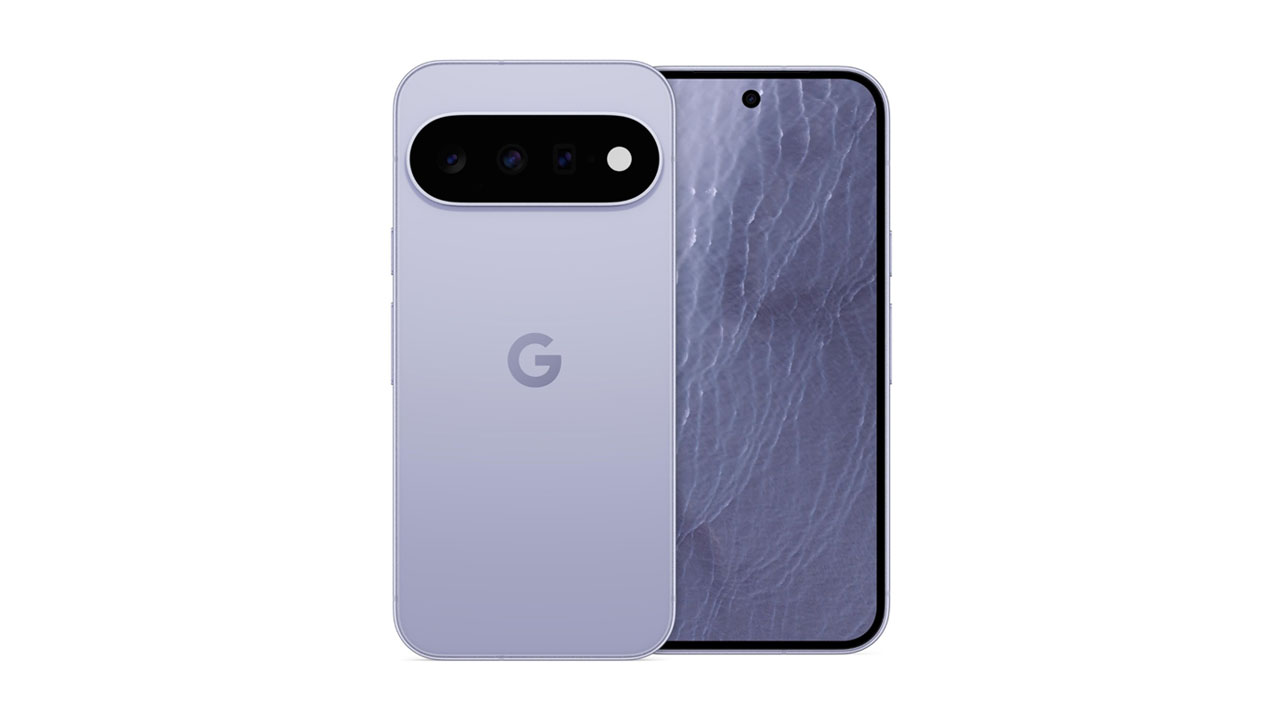
Google has officially introduced the Pixel 11, with the company’s latest generation of hardware and software to its standard Pixel smartphone.
While the Pixel 11 retains much of the familiar formula of the Pixel 10, Google has made several meaningful changes under the hood, particularly to the processor, security hardware, storage, wireless charging, and AI-powered camera features.
For this comparison, we are looking at the standard Google Pixel 11 versus the standard Pixel 10.
At first glance, the Pixel 11 may not look dramatically different from the Pixel 10. However, the upgrades become clearer when the two phones are compared specification by specification.
Pixel 11 vs Pixel 10: Key Upgrades at a Glance
The biggest changes come in the areas where Google has traditionally focused its Pixel phones: computational photography, artificial intelligence, security and software.
The Pixel 11 moves from the Tensor G5 to the new Tensor G6 processor and replaces the Pixel 10’s Titan M2 security chip with the newer Titan M3.
Google has also increased the maximum storage from 256GB to 512GB, while the entry-level storage has moved from 128GB to 256GB.
The battery capacity itself sees only a tiny increase, from around 4,970mAh on the Pixel 10 to 4,985mAh on the Pixel 11.
However, Google now rates the Pixel 11 at 30+ hours of battery life, compared with the Pixel 10’s 24+ hours. Wireless charging also jumps from 15W on the Pixel 10 to 25W on the Pixel 11.
| Feature | Google Pixel 10 | Google Pixel 11 |
|---|---|---|
| Display | 6.3-inch Actua OLED, 60-120Hz | 6.3-inch Actua OLED, 60-120Hz |
| Resolution | 1080 × 2424 | 1080 × 2424 |
| Processor | Tensor G5 | Tensor G6 |
| Security chip | Titan M2 | Titan M3 |
| RAM | 12GB | 12GB |
| Base storage | 128GB | 256GB |
| Maximum storage | 256GB | 512GB |
| Battery | 4,970mAh | 4,985mAh |
| Claimed battery life | 24+ hours | 30+ hours |
| Wired charging | Up to 55% in 30 minutes with 30W+ charger | Up to 55% in 30 minutes with 30W+ charger |
| Wireless charging | 15W Qi2 | 25W Qi2.2 |
| Main camera | 48MP | 48MP |
| Ultrawide | 13MP | 13MP |
| Telephoto | 10.8MP, 5x | 10.8MP, 5x |
| Maximum zoom | 20x on Pixel 10 | 30x Super Zoom |
| Operating system | Android 16 | Android 17 |
| Software support | 7 years | 7 years |
| Weight | 204g | 197g |
Tensor G6 Is the Biggest Hardware Upgrade
The most important change inside the Pixel 11 is Google’s move from the Tensor G5 to the Tensor G6.
The Pixel 10 introduced the Tensor G5 as Google’s first Tensor chip manufactured using TSMC’s process technology.
With the Pixel 11, Google moves to the next-generation Tensor G6, continuing its focus on on-device AI rather than simply chasing benchmark scores.
The Pixel 11 also gets the Titan M3 security coprocessor, replacing the Titan M2 used by the Pixel 10.
Google says the new security architecture includes quantum-safe secure boot hardware alongside the Tensor security core, Titan M3 and Trusty trusted execution environment.
This means the Pixel 11’s biggest performance advantage is likely to be felt in AI workloads, image processing and Google’s increasingly sophisticated on-device features rather than simply opening apps a little faster.
Storage Has Been Doubled at the Entry Level
One of the more practical changes is the storage configuration.
The Pixel 10 started with 128GB of storage, with 256GB available as the higher option.
The Pixel 11 starts at 256GB and is also available with 512GB, while retaining 12GB of RAM.
That is a significant improvement for people who keep large photo libraries, download games, or regularly record high-resolution video.
It means you no longer have to choose the higher storage configuration simply to avoid the limitations of a 128GB phone.
The Display Is Almost Unchanged
If you were hoping for a major display upgrade, the standard Pixel 11 is not that phone.
Google retains the 6.3-inch Actua OLED display with a 1080 × 2424 resolution and a 60-120Hz refresh rate.
The Pixel 10 already offered the same basic display configuration, including up to 3,000 nits of peak brightness and Gorilla Glass Victus 2 protection.
So, unlike the processor and storage, the screen should feel very familiar to anyone upgrading from a Pixel 10.
The unchanged 60-120Hz refresh range is also worth noting. The standard Pixel 11 does not get the 1-120Hz LTPO panel found on Google’s Pro models.
Pixel 11 Is Lighter Than the Pixel 10
Google has made a small but welcome change to the physical design.
The Pixel 10 weighs around 204 grams, while the Pixel 11 comes in at 197 grams. The dimensions remain essentially the same at 152.8 × 72 × 8.6mm.
That means the Pixel 11 is about 7 grams lighter without becoming smaller.
The overall design philosophy also remains familiar, with Google’s camera bar continuing to define the rear of the phone.
The Pixel 11 retains an aluminum frame, Gorilla Glass Victus 2, and IP68 dust and water resistance.
Camera Hardware Has Not Been Completely Redesigned
Interestingly, the standard Pixel 11 does not receive the dramatic camera hardware changes seen on the Pro models.
The Pixel 11 uses a 48MP main camera, 13MP ultrawide and 10.8MP 5x telephoto camera. That is broadly the same camera configuration as the Pixel 10.
The bigger changes are therefore on the software side. Google has added Magic Capture and Camera Looks to the Pixel 11.
Magic Capture is designed to automatically capture and curate the best moments from photos and videos, while Camera Looks provides more control over the visual style of captured images.
The Pixel 11 also increases its Super Zoom capability to 30x, compared with the Pixel 10’s 20x maximum zoom.
The phone still has a 5x optical telephoto camera, so the increase primarily comes from Google’s computational photography and zoom processing rather than a longer physical telephoto lens.
AI and Gemini Take a Bigger Role
AI is still one of the main reasons to consider the Pixel 11. The phone launches with Android 17 and includes Gemini Intelligence, Gemini Nano, Gemini Live and Google’s suite of Gemini-powered applications.
Features such as Circle to Search, Live Translate and Call Assist also remain part of the Pixel experience.
The important difference is that the Tensor G6 gives Google a newer hardware platform for these experiences.
Google’s approach with Pixel has increasingly been to make the phone feel smarter rather than simply faster.
The Pixel 11 continues that strategy with deeper AI processing, smarter camera features and Google’s latest Gemini integration.
Battery Life Gets a Bigger Upgrade Than the Battery Capacity Suggests
On paper, the battery upgrade looks almost insignificant.
The Pixel 10 has a typical 4,970mAh battery, while the Pixel 11 has a typical 4,985mAh battery. That’s only a 15mAh difference.
However, Google now claims 30+ hours of battery life for the Pixel 11, compared with the Pixel 10’s 24+ hour rating. That is a much more substantial improvement than the capacity numbers alone suggest.
The improvement is likely due to the combination of the Tensor G6, Android 17, and Google’s software-level power management rather than a significantly larger battery.
Wired charging remains rated for up to 55% in about 30 minutes with a 30W USB-C PPS charger or higher.
The more noticeable charging upgrade is wireless charging, which rises from 15W to 25W with the Pixel 11’s Qi2.2-certified Pixelsnap system.
Seven Years of Updates Remain
Google continues to offer seven years of operating system, security, and Pixel Drop updates with the Pixel 11.
That is the same long-term support commitment offered by the Pixel 10, so there is no improvement in the length of support itself.
The difference is that the Pixel 11 starts with Android 17, giving it a newer software starting point.
For someone planning to keep the phone for several years, this is an important aspect to consider a Pixel.
What Hasn’t Changed?
Despite the new generation number, quite a lot of the Pixel 10 formula carries over.
The Pixel 11 keeps the 6.3-inch 120Hz-class OLED display, 12GB RAM, 5x telephoto camera, 30W-class wired charging and IP68 durability.
The standard model also does not get the major camera hardware upgrades offered by the Pixel 11 Pro.
This makes the Pixel 11 more of an evolutionary upgrade than a complete redesign.
Google appears to have concentrated its efforts on the areas that are less obvious from a specification sheet: processor efficiency, AI capabilities, computational photography, security and wireless charging.
Pixel 11 vs Pixel 10: Should You Upgrade?
The Pixel 11’s Tensor G6, doubled base storage, faster 25W wireless charging, lighter body, improved AI capabilities and 30x Super Zoom are all useful improvements.
The move to Android 17 and Titan M3 also gives the newer phone a longer runway for future software and security features.
However, the display is essentially unchanged, and the core camera hardware remains very similar. The battery capacity is also almost identical, even though Google’s battery-life rating has improved considerably.
For someone using an older Pixel, the Pixel 11 is an easy recommendation.
If your Pixel 10 is still performing well and you are mainly looking for a major camera or display upgrade, the standard Pixel 11 may not provide enough of a hardware jump.