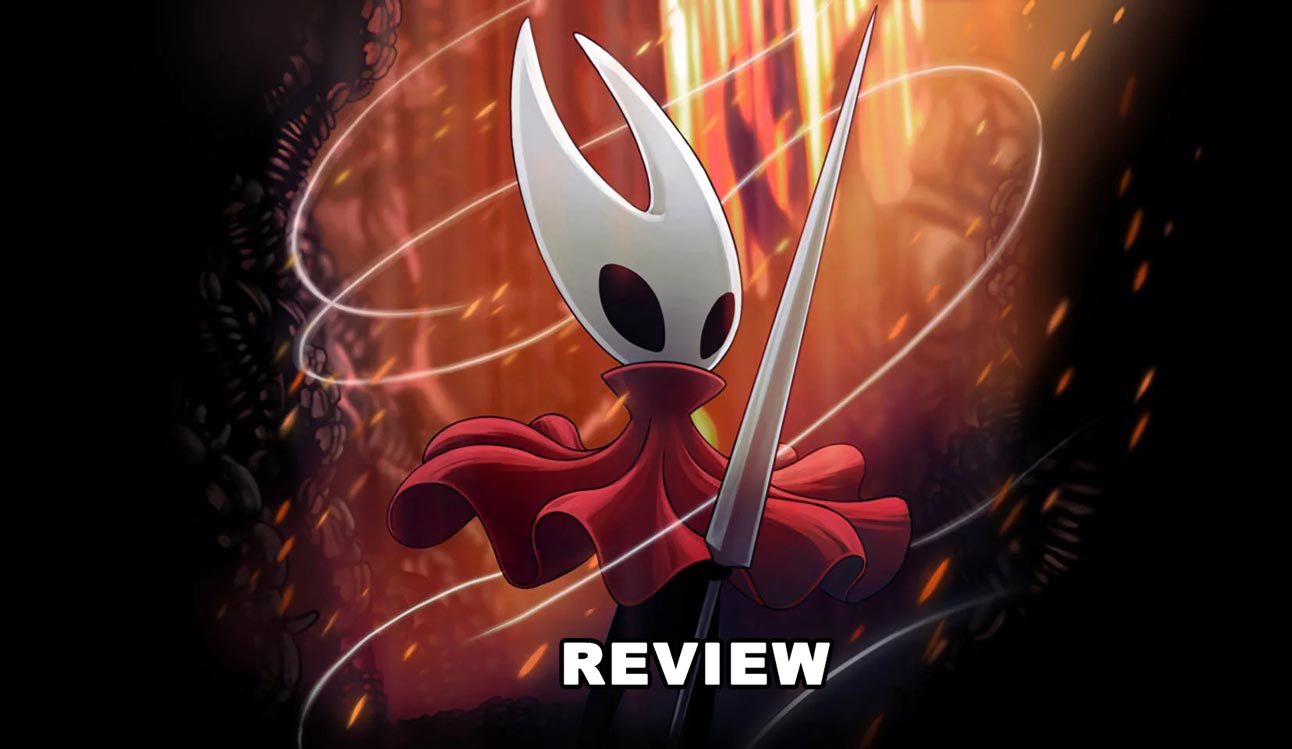
Hollow Knight: Silksong isn’t just a sequel — it’s a bold reimagining of what made the original so special. Team Cherry took their haunting, hand-drawn world and infused it with new energy, faster combat, and a protagonist bursting with personality. Here is our review of Hollow Knight Silksong, which will help you figure out whether it’s worth playing or not.
Silksong feels like a love letter to Metroidvania fans who grew up with Hollow Knight, but with its own vibe. The world is melancholic and weird, but livelier and more varied than the original. The moment-to-moment gameplay is tighter and faster, and the game’s personality sneaks up on you, dark, whimsical, a pinch of tragic, and a lot of weird insect politics. It never forgets to make you feel small and skillful in the same breath.
Story & Characters (without spoilers)
You play as Hornet (yes, the same Hornet from the first game), thrust into a new, cursed kingdom. The setup is simple but effective: survival and a goal that keeps you moving forward.
Where Silksong shines is in how it reveals the story through environment, NPC interactions, and those small dialogue beats that stick with you. Hornet isn’t a blank slate — she’s got personality and purpose, and that changes how the narrative lands compared to the silent wanderer of Hollow Knight.
New characters are memorable. The game introduces a cast that ranges from tragic to hilarious; they all feel designed with care. Sidequests often reward you with character moments, not just loot, which makes exploration emotionally satisfying as well as mechanically rewarding.
World design & Exploration
This is where Silksong really shows off how good Team Cherry is at building worlds. Every area feels different and memorable; you’ve got lush green zones, creepy tunnels, glowing ruins, and way more in between. Each place has its own vibe, enemies, and music that make it stand out.
Exploring feels smooth and rewarding. You’re not just running around lost all the time; the map gives you hints about where to go next, but still leaves room for you to discover secrets on your own. Backtracking doesn’t get boring because once you unlock new abilities, old areas open up in new ways.
There are also optional areas that you can skip if you want, but they usually give great rewards or show off some of the best level design in the game. It’s clear that every path and shortcut was built with care, and that variety keeps the game fun from start to finish.
Combat & Controls
Combat in Silksong is faster, more acrobatic, and more combo-friendly than the original Hollow Knight. Hornet’s moveset gives you mobility and expression, dashes, precise attacks, and tools that make fights feel like short, tense dances. Enemy variety is strong: some enemies are simple and thematic, others are “oh no” bullet-hell-ish spectacles that test your reflexes.
Boss design is excellent across the board. Some fights are emotionally resonant, mechanically brilliant fights, and a handful that will straight-up ruin your day (in a good way, if you’re into that). Checkpoints and respawn systems are generous enough that frustration rarely tips into rage. The learning curve is firm but fair: when you die, you usually feel like it was because you missed something, not because the game cheated.
Progression, tools, and upgrades
Silksong replaces the Charm system with mechanics that emphasize playstyle and choice without bloating you with stat screens. Tools and abilities are intuitive and multifaceted — many of them have both traversal and combat uses. Leveling or materials systems (kept intentionally light) support experimentation rather than min-max grinding.
Rewards for exploration are satisfying: new moves, upgrades, and story beats all feel purposeful. There’s also a nice balance between short-term power-ups and longer-term unlocks, which keeps opening new options fresh for a long time.
Difficulty & accessibility
The game is challenging but not mean. There are optional difficulty spikes for players who want masochism, and the main path is approachable for anyone willing to learn patterns.
Accessibility-wise, there are quality-of-life options and fair checkpoints; however, there’s room to expand on presets for players who want lower mechanical demands (e.g., more assistive options for aiming or combat). Still, the difficulty tuning is better than most action-Metroidvanias I’ve played recently.
Art & Animation
Artistically, Silksong is gorgeous. The world uses a richer palette than Hollow Knight, with areas that glow, stink, or shimmer in ways that match their themes. The character sprites and animations are expressive.
Hornet’s moves look weighty and precise, enemies have character in every frame, and bosses feel like setpieces. Backgrounds are layered and full of tiny details that reward those who stop and look. The art style supports both the eerie and the silly, sometimes at the same time.
Sound
The soundtrack is an absolute mood chef. Tracks shift from melancholic piano loops to dramatic strings to percussive, driving beats for combat sequences. Hits, enemy calls, and ambient effects are punchy and satisfying. Boss themes deserve special praise: they elevate fights and stick with you after you beat them. The audio mix keeps important cues clear, which is crucial in a game built around pattern recognition.
Performance
The game feels polished. Load times are reasonable, UI flows well, and bugs are rare from my run(yeah, yeah, I know the game is all about bugs). Occasionally, you may find a small collision or a path marker that’s a bit confusing, but nothing game-breaking. The overall presentation is tight; it’s obvious the devs iterated heavily on pacing and flow.
Replayability
Silksong has strong replay value. Multiple difficulty options, optional boss suites, collectibles that unlock secrets, and challenges encourage replays. There are also gameplay-affecting items and routes that you can purposely ignore for your first playthrough, leaving neat things to discover later. Speedrunners and challenge-seekers will find a ton to sink time into.
Criticisms
No game is perfect, and Silksong has a few rough spots worth mentioning. Some of the optional areas can be insanely tough — not in a fun “challenge accepted” way, but more like a “why is this here?” kind of frustrating.
The story also keeps things very subtle, which works for some players, but anyone hoping for a clearer, more direct plot might find it a bit too quiet. The menus could use more guidance, too, especially early on, since a few ability details aren’t explained very well and need trial and error to figure out.
Finally, there are moments where the pacing slows down — stretches where not much new happens, making it feel a little draggy before the next big discovery. Still, these flaws don’t ruin the experience; they just stand out in a game that’s otherwise super polished.
Final verdict
Silksong refines and improves nearly everything that made Hollow Knight special. It’s faster, more personality-driven, and packed with memorable encounters and areas. It respects player skill while offering plenty of avenues for discovery. Its small faults don’t undercut the overall brilliance.
Scores (out of 10):
- Story & Characters: 8.5
- World design & Exploration: 9.5
- Combat & Controls: 9.0
- Art & Animation: 9.5
- Sound: 9.0
- Performance: 8.5
- Replayability: 8.8
Overall: 9.2 / 10 – a near-classic that’s easy to recommend.
Who should play it?
Silksong is perfect for anyone who loves the original Hollow Knight and wants a faster, more focused experience with tighter combat and fresh exploration. If you’re into Metroidvania-style games that mix skill-based action with a rich, moody atmosphere, this one’s absolutely worth your time.
On the other hand, if you prefer games that focus mainly on story with less challenging combat, or if you get frustrated by tough optional bosses, you might want to hold off or watch a playthrough instead.
Silksong is one of those games that makes you want to keep playing even when your thumbs hurt, and it’s midnight. It’s stylish, moody, and actually fun to get good at. If you have even a smidge of patience for pattern-based combat and exploration, this one’s a banger.