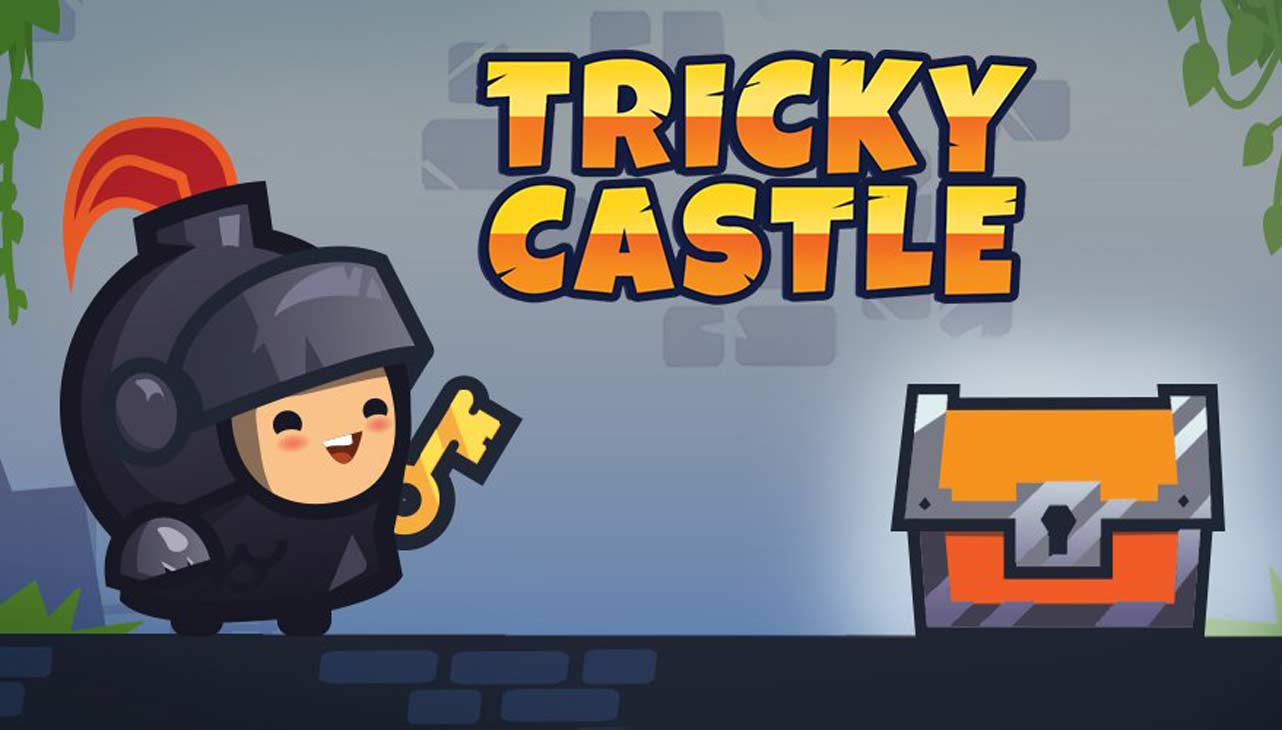
I spent a solid chunk of time running through the level design of Tricky Castle, its highs and lows, and what makes it feel satisfying (or occasionally annoying). Here is my in-depth review of this Puzzle-Platformer, Tricky Castle
Quick Overview
Tricky Castle is a precision-heavy puzzle-platformer that thrives on clever misdirection, spatial puzzles, and tight timing. Its vibe leans toward a gothic playground—dark, spooky, yet playful—built around a core philosophy of “don’t trust what you see.”
The difficulty sits in the medium-to-hard range, with noticeable spikes that test both patience and reflexes, but the game rewards observation and persistence more than brute skill.
For completionists and speedrunners, the replay value is massive thanks to hidden secrets and multiple routes, while casual players may find a solid but slightly less enduring experience.
First impressions
Tricky Castle nails first impressions. The visual language is cohesive: stone textures, candle-lit corridors, warped tapestries, and contraptions that look both archaic and cunning. The palette usually sits in moody greys and purples with occasional warm highlights from torches or magical runes — it sets a tone of mystery without being oppressive.
Sound design does a ton of heavy lifting. Ambient creaks, distant dripping water, subtle mechanical clicks that hint at hidden traps — these audio cues are part of the puzzle. A sparse, minimalist score supports the mood, swelling during tense sections to keep your pulse up. Overall, the atmosphere helps sell the “trick” in Tricky Castle.
Level design
This level’s core design feels like: misdirection is a mechanic. The castle constantly teaches you to distrust your first impulse — floors that look safe, platforms that vanish, doors that appear to be exits but are red herrings. That’s the delight: the moment you realize the environment was “teaching” you a rule, and you start applying that rule to solve later rooms, is immensely satisfying.
Early-room mechanics are introduced clearly, then combined in later stages in fresh ways. You’ll go from “oh that tile falls” to “oh those tiles trigger the whole room to rotate” — the layering is smart.
Good sections give subtle hints (a slightly different tile texture, a repetitive mechanical sound) so you can learn to avoid nastiness rather than feeling cheated.
New mechanics are added at a measured pace. Each new toy (moving platforms, pressure plates, light beams, etc.) gets at least one “teaching moment” before it’s mashed into a complex puzzle.
A few sequences demand pixel-perfect timing with little room for error, turning a clever puzzle into a twitch test. If you’re not into that, these are gonna sting.
Depending on the build, checkpoint placement can be stingy — dying near the end of a long section and repeating 2+ minutes of precise platforming is demotivating. When checkpoints are generous, it’s excellent; when they’re not, it feels unnecessarily punitive.
Puzzles & mechanics
Tricky Castle doesn’t lean on one gimmick; it builds a toolbox and asks you to use it creatively.
It keeps things fresh by constantly shifting the way puzzles work.
A lot of its charm comes from environmental trickery—fake walls, vanishing platforms, and tiles that swap properties mid-jump all push you to second-guess your instincts, and the best moments come when you spot the trick just in time and feel that satisfying “aha” rush.
Beyond illusions, the game leans into physics-based challenges like movable crates and weight-sensitive platforms, making you think more strategically about positioning rather than just relying on twitchy reflexes.
Light and rune puzzles add another layer, asking you to carefully align beams or toggle symbols to unlock hidden passages; they’re slower to solve, but extremely rewarding when the pattern finally clicks.
Even enemies get folded into the puzzle design—sometimes they’re more than just threats, acting as tools you can manipulate, like luring one onto a pressure plate to trigger a door. All together, these mechanics give the castle a real sense of variety.
Replayability: Very good. Rooms often have optional alternative routes, collectibles, and time-based challenges for speedrunners. If you like replaying to shave off seconds or find all secrets, there’s depth.
Difficulty curve: fair or frustrating?
Mostly fair. The designers tend to teach you mechanics before punishing you with complex versions. However, there are two caveats:
Precision sections where missing a platform often sends you far back. Hidden solutions that aren’t always telegraphed well and feel like guesswork on first attempts.
If you’re someone who likes learning through trial and error, you’ll enjoy the curve. If you prefer a more relaxed platforming experience, be prepared to respawn a few times.
Aesthetics
Graphically, the castle reads cleanly; you never lose track of interactive vs. background elements. Animations for traps and mechanisms are satisfying and have a tactile feel: you can almost sense the gears turning. The UI is minimal and unobtrusive, which is great for immersion.
A few textures might repeat a bit on larger walls, but it doesn’t break the immersion. Hitbox clarity is generally good, but there are a couple of spots where what looks like a solid ledge has a slightly deceiving collision, rare, but worth noting.
Controls & performance
Controls are tight and jump trajectories are consistent, and the responsiveness makes tricky platforming feel fair. If you have controller options, they map well, and the analog sensitivity helps with nuanced jumps.
Performance-wise, Tricky Castle runs smoothly on mid-range hardware in most cases. There are occasional frame dips in rooms with heavy particle effects or complex rotations, but nothing game-breaking. Load times are snappy between subsections.
Music & sound – underrated MVP
The audio cues do more than set the mood; they’re gameplay signals. A small rattle could mean a trap is about to activate, and the music’s rise-and-fall heightens suspense. The soundtrack is atmospheric, minimalistic, and perfectly aligned with the castle’s “mystery” theme.
What I loved
- The satisfying “aha” puzzle moments where design misdirection is revealed as a clever rule.
- Cohesive atmosphere, visuals, and audio work hand-in-hand.
- Strong replay value
- Controls are polished and reliable.
What I’d change
- Make checkpoint placement slightly more forgiving in long precision segments.
- Tweak a couple of iffy hitboxes/collision edges that caused unfair deaths.
Tips & strategies (for new players)
- Observe before you act. Many traps are telegraphed; stand back and listen for mechanical ticks or look for repeated visual cues.
- Learn the rules. Early rooms introduce mechanics — internalize them because later rooms mix and match those rules.
- Use enemies as tools. If the design allows it, enemies often serve a purpose beyond being obstacles.
- Patience > precision. Slow, measured movements often beat frantic button-mashing in later puzzle combinations.
- Explore off the obvious path. Secret rooms frequently hide behind suspiciously plain walls or deceptive backgrounds.
Final verdict
Tricky Castle is a clever, well-crafted puzzle-platforming experience that rewards curiosity, observation, and pattern recognition. It stumbles occasionally with checkpoint placement and a few precision sections that can feel unfair, but those moments are outweighed by beautifully designed puzzles, immersive atmosphere, and meaningful replay hooks.
Techgamesnews Score: 9 / 10