When people hear “another Westeros show,” expectations instantly go sky high. After Game of Thrones redefined fantasy TV and House of the Dragon doubled down on political chaos and dragon warfare, HBO’s next chapter takes a surprisingly different route.
Story
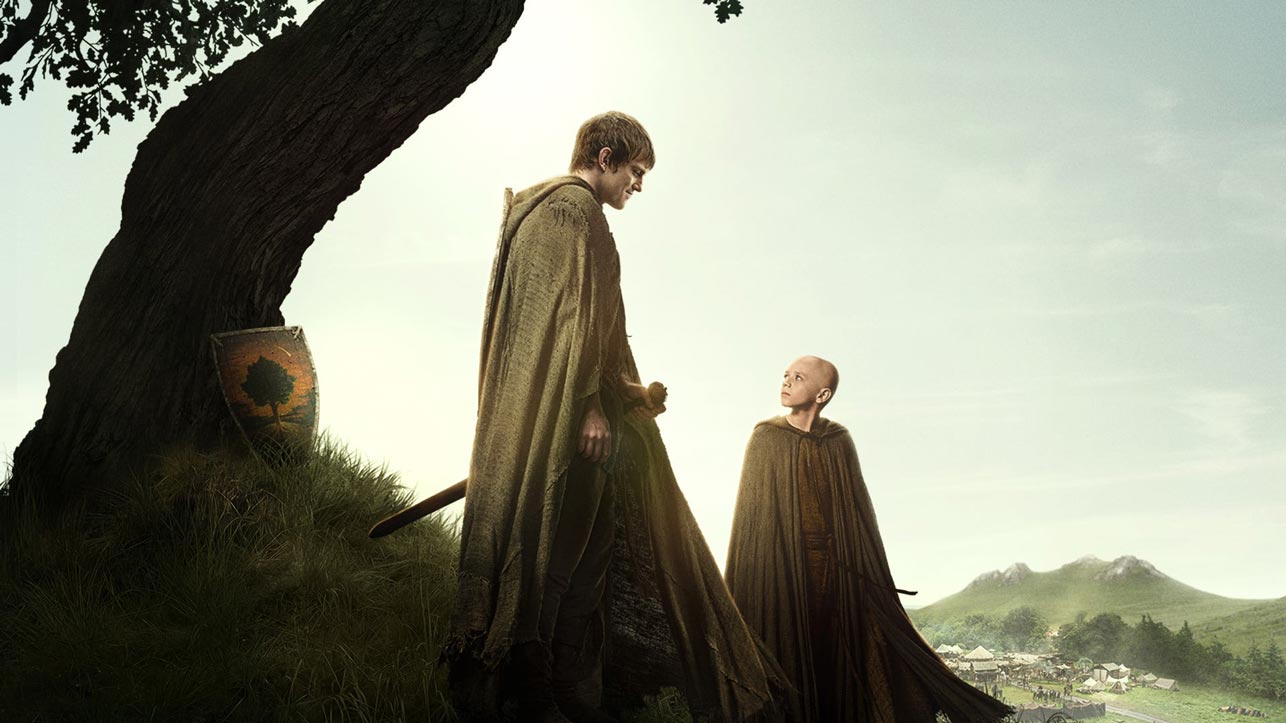
Set nearly a century before the War of the Five Kings, this adaptation of George R. R. Martin’s Dunk and Egg novellas ditches massive-scale warfare for something far more intimate. Instead of kings and queens plotting over maps, we follow a wandering hedge knight, Ser Duncan the Tall (Dunk), and his sharp, secretive young squire, Egg.
No dragons dominating the sky. No apocalyptic prophecy screaming in the background. Just muddy roads, small tourneys, bruised pride, and the fragile idea of honor in a world that rarely rewards it. And that shift in scale? It changes everything.
For viewers who loved the earlier seasons of Game of Thrones, when political maneuvering and character dynamics mattered more than spectacle, this series feels like a return to that era. However, those expecting constant escalation may find the pacing deliberately restrained. Episodes often simmer rather than explode.
Performances and Character
The emotional weight of the series rests heavily on the chemistry between Dunk and Egg, and fortunately, that dynamic works. Dunk’s physical presence contrasts with his emotional uncertainty, making him a surprisingly relatable protagonist.
He is not a master tactician or natural-born leader. He is simply trying to be good in a world that rarely incentivizes goodness.
Egg, meanwhile, brings a level of sharp intelligence and subtle ambition that balances Dunk’s earnestness. Their conversations carry much of the show’s heart, often blending humor with quiet melancholy.
Supporting characters are layered rather than exaggerated. Even antagonists operate within believable motivations. The show avoids cartoonish villainy, opting instead for moral complexity, a hallmark of Martin’s writing.
Visuals
Although the scale is smaller, the production quality remains distinctly HBO. The tournament sequences are especially well-executed, emphasizing the brutal physicality of medieval combat rather than stylized spectacle.
Armor design, regional costuming, and set detail reinforce a lived-in Westeros that feels authentic. At the same time, the absence of large-scale visual spectacle might leave you underwhelmed.
This is not a dragon-heavy epic. The action scenes, while impactful, are limited in number and scope compared to previous entries in the franchise.
Storytelling and Pacing
The most divisive element of the series will likely be its pace. The storytelling is patient and methodical, prioritizing character development over dramatic shock.
There are moments where the narrative feels almost understated, especially for audiences accustomed to the escalating intensity of later Game of Thrones seasons.
Yet that slower rhythm is also what allows emotional beats to resonate. When conflict does arrive, it carries weight because it has been earned rather than manufactured for spectacle.
This show is tailored for people who value nuanced storytelling, subtle character arcs, and grounded fantasy drama. If you are primarily drawn to high-stakes warfare and constant political chaos, it may not meet your expectations.
Final Verdict
A Knight of the Seven Kingdoms does not attempt to outshine its predecessors in scale. Instead, it carves out its own identity as a character-focused medieval drama set within a familiar world.
Its strength lies in emotional authenticity, moral ambiguity, and the evolving bond between two unlikely companions.
While its restrained pacing and reduced spectacle may limit its mass appeal, the series succeeds in offering a fresh tonal perspective within the Westeros universe.
For fans of thoughtful fantasy and Martin’s more intimate storytelling, this is a compelling addition to the franchise. Those seeking nonstop intensity might need to avoid this.