Meta Connect 2026 has wrapped up its main keynote, and this year’s event was heavily focused on artificial intelligence, AI-powered glasses, and a new generation of lightweight VR hardware.
Meta spent much of its time showing how its Muse AI agent can move across phones, computers, glasses, and new wearable devices.
The company also unveiled new Ray-Ban Meta glasses, Ray-Ban Meta Audio, a major expansion of its Meta Glasses lineup, updates for Meta Ray-Ban Display and the new Meta VR Glasses, which combine virtual reality, spatial computing, entertainment and productivity in a roughly 100-gram form factor.
Here is everything Meta announced at Connect 2026.
Meta Muse Gets More Powerful
Muse was one of the biggest themes of Meta Connect 2026. Meta is positioning Muse as a personal AI agent rather than simply another chatbot or voice assistant.
The updated Muse can carry on longer conversations while continuing to work in the background.
You can also customize the assistant’s voice by describing how you want it to sound, including characteristics such as speed and accent.
Meta is also developing Muse Realtime Avatar, which turns Muse’s real-time voice capabilities into an expressive interactive avatar.
One of the biggest changes is that Muse is coming to Meta’s AI glasses. You will eventually be able to activate Muse hands-free and ask questions about objects and information in front of you.
For example, Muse can identify a product on a shelf, understand a flyer, or work through a long list without requiring the user to explain everything manually.
Muse is also getting its own email address, allowing it to communicate with users and potentially perform tasks through email.
Muse Can Now Control Your Mac
Meta also expanded Muse’s computer-use capabilities.
With permission, Muse can now control applications on a Mac and continue working on tasks even after the user walks away from the computer.
This moves the service closer to an autonomous digital assistant that can actually perform tasks rather than simply provide instructions.
Meta is also expanding Muse’s third-party integrations. New connectors include Walmart, Best Buy, American Eagle Outfitters, DICK’S Sporting Goods, Fanatics, Gap, Michael Kors, Sephora, Ulta and Wayfair.
Payment support is also being expanded through Shop Pay and PayPal.
For productivity, Meta announced integrations with Notion, Granola, GitHub and Box, while Expedia and Instacart are also joining the ecosystem.
Muse Charm Announced
Meta also introduced Muse Charm, a small pocketable device designed specifically for interacting with Muse through voice.
The idea is to provide access to the AI agent without requiring a phone, computer, or glasses. Meta says more information about Muse Charm will be revealed later this year.
Ray-Ban Meta Audio Glasses
Meta introduced its first dedicated audio-only smart glasses with Ray-Ban Meta Audio.
The glasses weigh 43 grams and are designed to provide open-ear audio, calls, and hands-free AI without a camera.
They offer up to 12 hours of battery life, with an additional 48 hours available through the charging case.
Ray-Ban Meta Audio comes in two styles: Clubmaster and Burbank, with 23 color and lens combinations.
Pricing starts at $349, with pre-orders beginning September 23 and shipping scheduled for October 13.
Ray-Ban Meta Gen 3
Meta also announced the third generation of its Ray-Ban Meta smart glasses.
The new models feature a slimmer design, longer battery life, and a customizable action button for quicker access to Meta AI. The glasses are available in three styles: Aviator, Zena and Wayfarer.
Battery life has increased to up to nine hours, while a new six-microphone array is designed to reduce more than 90% of background noise.
The glasses feature a 12MP camera capable of recording 3K Ultra HD video, along with a new Dynamic Photos feature that lets users select the best frame from a captured moment.
Meta also says its AI glasses will support Dolby Atmos video capture later this year.
The Ray-Ban Meta Gen 3 starts at $449 and is available now.
More Meta Glasses Styles
Meta is significantly expanding its own Meta Glasses lineup.
New styles include the Meta Capri and Meta Nova, while the company also announced a new Ivory colorway for its Kylie Jenner collaboration.
Meta is also launching its first collaboration with LISA, featuring two special-edition designs: the Meta Adventurer LISA Edition and Meta Capri LISA Edition. Both start at $399.
The company also announced the Meta Fury limited-edition model and a new Meta Adventurer with a plug-in case starting at $249, making it the most affordable Meta Glasses model announced so far.
Meta expects to have more than 100 AI glasses options across its Ray-Ban, Oakley and Meta Glasses brands by the end of 2026.
Meta Ray-Ban Display Gets Major Updates
Meta’s existing Ray-Ban Display glasses are also receiving new capabilities.
The glasses will gain hands-free cycling and public-transit directions, while walking navigation can now use recognizable landmarks rather than relying solely on street names.
Instead of giving a direction based on a road name, the system can use something visible in the user’s surroundings as a reference.
Meta also introduced Hologram, which creates a photorealistic digital representation of the user for video calls.
The feature uses a short self-capture and can reproduce expressions based on the user’s voice and speech. Early access is planned for WhatsApp users in the US later this fall.
The glasses are also getting an Explore app for discovering new experiences, mirrored phone notifications, expanded calendar functions, and Threads community feeds.
Meta Ray-Ban Display is expanding beyond the US as well, with sales and pre-orders coming to the UK, Canada, France, Italy and Germany.
AI Glasses Get Hearing Assistance
Meta announced an accessibility-focused hearing enhancement feature for supported AI glasses.
The company says the feature is designed for adults 18 and older with perceived mild-to-moderate hearing loss.
It is planned for launch in the US later this year and will cost $149.99 as an add-on, or be included with a Meta One subscription.
Meta also announced new audio controls, including left/right audio balance and mono audio.
AI Glasses Get Fitness and Shopping Features
Meta is also pushing its AI glasses beyond communication and photography.
New fitness capabilities include hands-free guided workouts for running and cycling, while nutrition tracking will provide personalized insights.
The glasses will also gain shopping AI capable of identifying products, prices, and reviews. You can then set alerts or potentially purchase products using voice commands.
Navigation is being made more conversational as well, with directions based on landmarks rather than simply street names.
Meta VR Glasses Announced
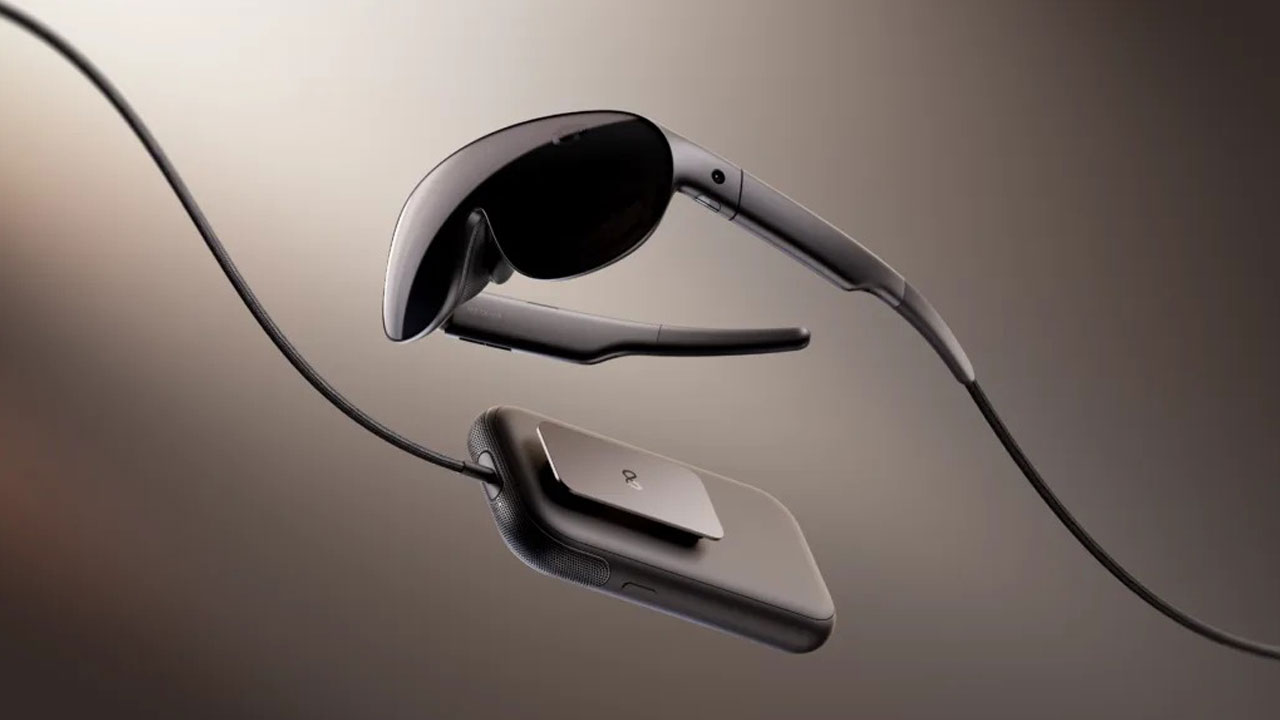
The biggest hardware announcement of Connect 2026 was the Meta VR Glasses.
Unlike the company’s Quest headsets, Meta VR Glasses use a glasses-like form factor and weigh approximately 100 grams.
Meta says they are five times lighter than the Meta Quest 3 because the computing hardware, battery, and storage are moved into a separate puck that connects to the glasses.
The glasses feature a 5K Infinite Display based on micro-OLED panels, with 37 pixels per degree.
They also support Dolby Vision and Dolby Atmos, giving them a strong focus on immersive entertainment.
The system is powered by Qualcomm’s Snapdragon Reality Elite processor.
A Portable Cinema
Meta is positioning the VR Glasses as more than a gaming device.
The glasses are the first VR device to receive IMAX Enhanced certification, and Meta says they will support 3D movies and expanded-aspect-ratio IMAX content.
Disney+ is expected to offer selected 3D movies on the platform beginning in November, while Meta is also working with services including Prime Video, YouTube, DIRECTV, AMC+, Crunchyroll, Plex, ESPN, Tubi, Peacock, HBO Max and Paramount+.
Meta says thousands of titles will be available internationally by the time the glasses launch, with additional 3D content planned for the future.
Immersive Sports
Sports are another major focus for Meta VR Glasses.
Meta says its partnership with ESPN will bring immersive sports experiences with 8K streaming and 180-degree views.
The company expects the platform to eventually offer more than 100 immersive live sports events every year, including content from MLB, NBC Sports, TNT Sports and UFC.
VR Glasses Can Replace Multiple Monitors
Meta is also targeting professionals with the VR Glasses.
You can create multiple virtual displays around them, allowing the glasses to function as a portable multi-monitor workstation. The system can also connect to existing devices and extend their screens.
One particularly interesting feature is the ability to turn a physical desk or table into a virtual keyboard and touchpad.
You can interact with the virtual workspace using your hands and eyes instead of traditional controllers.
Hologram Calling
Meta also demonstrated Hologram Calling for its VR Glasses.
The technology creates a photorealistic digital representation of the user that includes their expressions and reactions. During a call, the hologram can appear in the recipient’s environment with spatial audio.
Meta says the feature will arrive with the VR Glasses in spring 2027, while an early-access version will begin rolling out to Meta Ray-Ban Display users in the US through WhatsApp.
Beat Saber Gets Its Biggest Update Yet
Meta also announced a major update for Beat Saber.
The update introduces Flux, a new gameplay mode built around high-fidelity hand tracking.
Instead of relying entirely on traditional controllers, you can use your hands to interact with the game, slice notes, and build Jolt Energy for bonus points.
The update will arrive on Meta VR Glasses and Meta Quest next spring and also brings the game’s first major visual refresh and new logo in nearly a decade.
New VR Games Announced
Meta also revealed a collection of games coming to Meta VR Glasses and Meta Quest.
The announced titles include Cardmada, Dice Throne Digital, Dragon Grove, Phoenix Wright: Ace Attorney – Dual Destinies, Supernatural, Tetris Effect: Mixed Realities and Two Point Hospital.
Several of these experiences are being built around hand tracking, allowing them to work without traditional controllers on Meta VR Glasses while still supporting controllers on Quest.
Meta VR Glasses Price and Release Date
The Meta VR Glasses will launch in spring 2027 for $1,299.99 in the US.
The glasses weigh around 100 grams, while the external computing puck handles the processor, battery, and storage.
Meta says the puck’s battery can provide up to three hours of continuous high-resolution media playback and supports 45W fast charging.
Meta Connect 2026: The Bigger Picture
Meta Connect 2026 marked a significant expansion of Meta’s hardware strategy.
AI glasses were no longer presented simply as cameras and audio devices; Meta is building them around a personal AI agent that can understand the user’s surroundings and perform tasks.
At the same time, Meta VR Glasses push the company’s VR technology toward a much smaller form factor, combining entertainment, gaming, productivity and communication without the traditional bulk of a VR headset.
With Muse moving across phones, Macs, glasses, and dedicated hardware, Meta’s Connect 2026 announcements point toward a product ecosystem where AI is designed to follow you across different devices rather than remain confined to a single app.
Meta Connect 2026 continues through September 24 with developer-focused sessions covering AI, VR, AI glasses, and Horizon, so additional developer announcements may follow after the main keynote.