The Witcher 3: Wild Hunt is getting another major upgrade, and this time CD Projekt Red is going far beyond a simple visual refresh.
The Witcher 3: Wild Hunt – Remastered launches Today, bringing a large collection of visual, gameplay, quality-of-life, accessibility, modding, and performance improvements.
The Remastered version is also being released on Nintendo Switch 2 and Battle.net, and existing owners on qualifying platforms can upgrade for free.
CD Projekt Red has now published the complete list of major changes, giving us a much clearer picture of what players can expect when returning to the Continent.
Here is everything new in The Witcher 3 Remastered.
Improved Visuals and Rendering
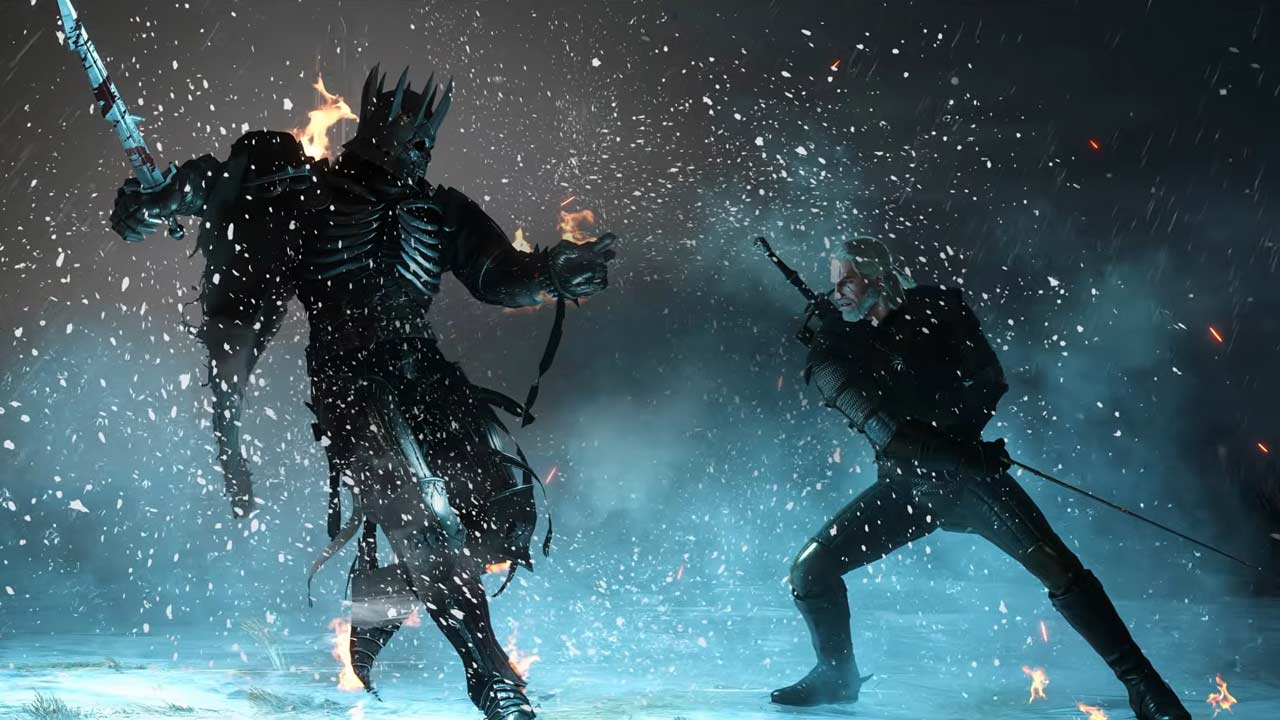
The most obvious changes are on the visual side. The Remastered version introduces a new shading model, improved textures and models, upgraded foliage, better lighting, and more detailed environmental rendering.
Several assets have also been updated using work from The Witcher 3 HD Reworked Project to improve the detail of environments, characters, and objects throughout the world.
Lighting and shading for grass and foliage have been improved, and Signs and skills now feature updated visual effects.
The game also gets improved tone mapping, better terrain and material rendering, enhanced screen-space reflections and shadows, improved bloom and new Image-Based Lighting.
Ray-Traced Local Shadows have also been added, alongside improvements to HDR calibration, motion blur and subsurface scattering. The latter should make character skin look more natural under different lighting conditions.
Path Tracing and New PC Graphics Features
PC players get some significant upgrades. The Remastered version adds Path Tracing, giving compatible hardware access to more advanced lighting and reflections.
NVIDIA users also get DLSS 4.5 with Ray Reconstruction, while AMD users get FSR 4, including Frame Generation and Anti-Lag 2 on supported Radeon RX 7000-series and newer graphics cards.
Intel GPU users get XeSS 2.0 with Frame Generation and Low Latency support.
CD Projekt Red has also added Ray-Traced HairWorks, which improves the lighting and shading applied to hair. The PC version now uses native DirectX 12 rendering with multithreading as well.
These improvements do come with increased system requirements, so PC players should check the new requirements before jumping back in.
Completely Reworked Skill System
One of the biggest gameplay changes is the redesigned skill system.
Skills are now organized into a proper skill-tree structure, with each skill having three ranks.
Instead of simply spending skill points to unlock whatever ability you want, progression now requires you to unlock prerequisite skills first.
CD Projekt Red has also rebalanced skill bonuses, effects, and synergies, and several skills have been renamed to better communicate what they actually do.
Because of this overhaul, existing skill points will be reset when players move to the Remastered version.
For players who have not touched The Witcher 3 in years, this should make character builds much more different from the original experience.
Transmogrification Lets You Change Gear Appearance
The Remastered version finally adds a feature many RPG players have wanted: equipment transmogrification.
You can now change the appearance of your weapons and armor without changing their statistics.
This means you can keep the equipment you want for its stats while making Geralt look the way you actually want.
The system is handled by master craftsmen Yoana and Hattori. New appearances are unlocked by adding equipment and crafting diagrams to your inventory.
There is also support for Blood and Wine dyes, with existing dyes carrying over to reforged equipment.
Combat Has Been Improved
Combat receives several changes designed to make Geralt’s movement and attacks smoother.
CD Projekt Red has polished the behavior of many non-boss monsters, including their attack patterns, counterattacks, movement, reactions, flight, and status-effect interactions.
Geralt also gets new finisher animations, improved gap-closing animations, and smoother movement during combat.
There should be a more responsive combat system without fundamentally changing the identity of The Witcher 3’s swordplay.
New Dynamic Combat Camera
The camera has received a major overhaul. A new dynamic combat camera improves visibility during fights, while a new exploration camera provides a wider field of view.
Target-lock switching has also been improved when moving the camera during combat. This should make encounters with multiple enemies easier to read, particularly when Geralt is surrounded.
Geralt’s Movement Has Been Polished
Geralt himself has received numerous animation improvements.
His jumping animation has been refined, while climbing ledges, climbing ladders, and vaulting have all been improved. The animations are also designed to make Geralt’s movement more responsive.
There are new idle animations and new finishers, and mounting and dismounting Roach, cantering, and galloping have received additional animation polish.
Roach Gets Better Handling
Roach has not been forgotten. The Remastered version improves collision avoidance while riding and adds a new Horse Control Input Sensitivity slider.
The horse’s movement animations have also been polished, including mounting, dismounting, cantering, and galloping.
And perhaps most importantly for exploration, you can now collect loot without dismounting Roach.
More Immersive Meditation
Meditation has also been redesigned.
Instead of simply switching to a menu screen, meditation now uses a time-lapse effect, so the passage of time feels more natural and immersive.
It is a small change, but one that fits nicely with the Remastered version’s broader goal of reducing immersion-breaking interfaces.
Map and UI Improvements
The map has received several quality-of-life improvements.
You can now switch between tracked quests more easily, while untracked quests have their own distinct marker and can be selected directly to track them.
The maximum number of map markers has also been increased, and additional marker types have been added.
You can also hide herbs, boats, and corpses from the minimap for a cleaner interface.
Quest notifications have been consolidated into a single HUD notification, and the loot system has received several useful changes.
Nearby loot can now appear in a single window instead of forcing you to interact with multiple loot windows.
A new loot feed shows recently collected items, and item tooltips to preview an item’s details before picking it up.
Expanded Photo Mode
Photo Mode has been dramatically expanded.
You can now place multiple characters into a scene and select different poses and expressions for Geralt and other characters.
You can also lock the camera, save camera presets, change the screenshot aspect ratio, and use different environment presets.
Weather and time of day can be changed, and the intensity of weather effects such as rain and storms can also be adjusted.
There is even a first-person camera option for Photo Mode.
You can toggle camera collisions, hide surrounding NPCs, and add placeable props to their scenes.
Rule-of-thirds guides and cinematic black bars are also available if you are looking to create more carefully composed screenshots.
New Accessibility Features
The Remastered version introduces a dedicated Accessibility section in the settings menu.
One of the additions is the Bard’s Ballad preset. It is designed to reduce cognitive load by simplifying certain mechanics to customize several gameplay systems.
Options include adjustable vitality regeneration, infinite breath while swimming, unlimited item durability, unlimited boat durability, ignored item weight, faster boats, and a toggleable Witcher Sense.
These options can be customized individually to give you more control over how you experience the game.
Tutorials Have Been Streamlined
New players should also have an easier time getting into The Witcher 3.
The tutorials have been streamlined, so they focus more directly on the game’s core mechanics rather than overwhelming you with information.
There is also a new option to quickly disengage from combat. You can unlock from your current target and sprint away instead of having to manually fight your way out of an encounter.
Cross-Platform Mod Support
One of the most interesting additions is official cross-platform mod support.
The Remastered version includes an in-game mod browser powered by mod.io. You can access it directly from the game’s main menu, connect to your CD Projekt Red account, and browse player-created content.
Mods can add things such as new quests, weapons, equipment, and balance changes. CD Projekt Red has also made various improvements to REDkit to help creators build and manage their own content.
This could significantly extend the game’s lifespan, particularly on platforms where traditional PC mod installation has historically been more complicated.
New Ukrainian Localization
The Remastered version also adds Ukrainian text localization, expanding the game’s language support.
CD Projekt Red has additionally added Xbox Play Anywhere support.
PS5 Pro Improvements
PS5 Pro players get several platform-specific upgrades.
The game supports PlayStation Spectral Super Resolution (PSSR), along with Variable Refresh Rate and uncapped frame rates.
The Ray Tracing Mode now targets 60 FPS, while Performance Mode provides higher resolution while targeting 60 FPS and can reach up to 90 FPS on VRR-capable displays.
PlayStation 5 also receives multithreaded rendering for improved performance.
Nintendo Switch 2 Features
The Witcher 3 Remastered is also launching as a native Nintendo Switch 2 version.
Switch 2 players get four different playstyles: Handheld, Pro Controller, Dual Grip with motion controls, and Mouse Sensor controls.
The game supports motion controls for actions including casting Signs, using consumables, calling Roach, firing the crossbow, throwing bombs, and controlling the horse.
Gyroscope aiming is also available, while the touchscreen works in menus, dialogue, the world map, Gwent, and Photo Mode.
The game also supports Joy-Con 2 HD Rumble, VRR in handheld mode and HDR.
Hearts of Stone and Blood and Wine Included
There is another major reason to return to The Witcher 3.
Existing owners of the base game will receive Hearts of Stone and Blood and Wine at no additional cost. Both expansions are included with the Remastered version.
That means if you previously owned only the base game, you can now experience both major expansions as part of the Remastered package.
New Platforms
The Remastered version is launching on PC, PlayStation 5, Xbox Series X|S, and Nintendo Switch 2, with Battle.net also joining the PC distribution platforms.
Existing owners can upgrade for free within the same platform ecosystem.