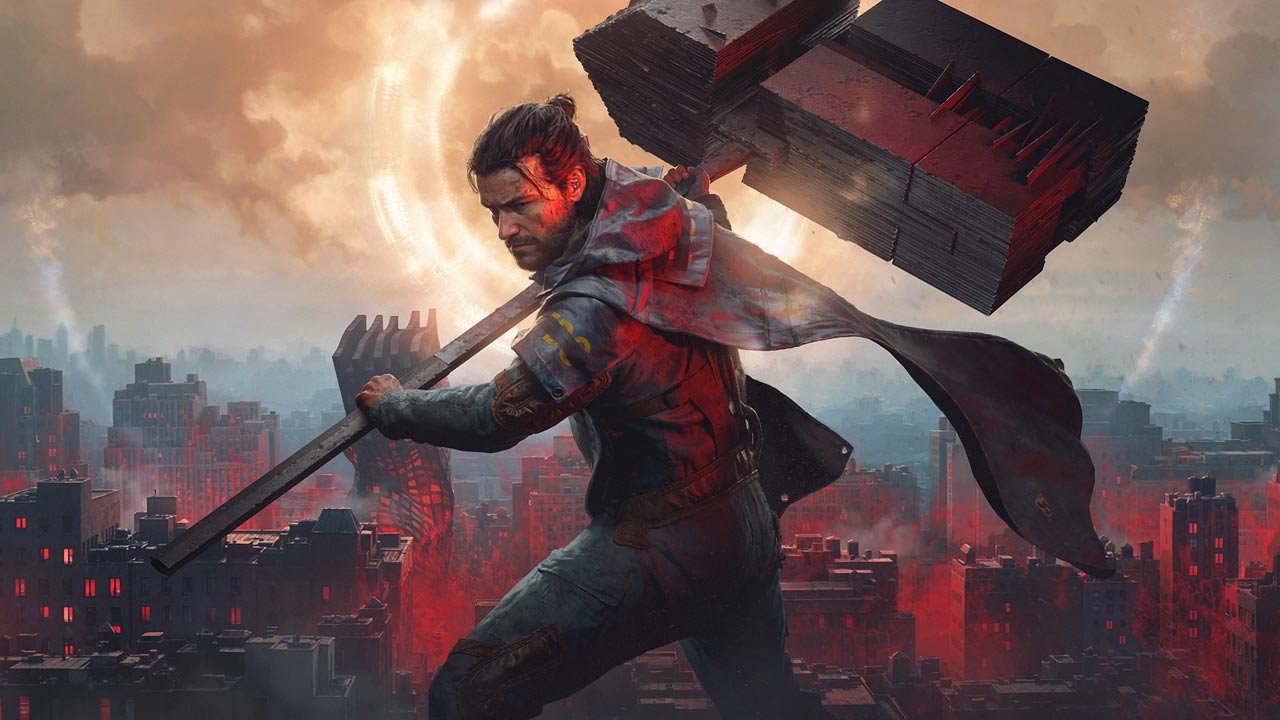
Control Resonant had a difficult job. Remedy Entertainment’s original Control became one of the studio’s most distinctive games thanks to its bizarre world, supernatural abilities, mysterious storytelling, and the endlessly fascinating Oldest House.
Rather than simply making a bigger version of that formula, Remedy has taken a much bigger swing with Control Resonant.
The sequel moves beyond the Oldest House, puts Dylan Faden in the lead, expands the setting into a warped version of Manhattan, and places a much greater emphasis on melee combat, exploration, traversal, and RPG-style progression.
It is a surprisingly ambitious sequel, and while not every change works perfectly, the result is another wonderfully strange Remedy experience.
A Very Different Control Game
The first thing that stands out about Control Resonant is just how different it feels from its predecessor.
The game follows Dylan Faden, Jesse Faden’s brother, as he finds himself at the centre of another supernatural crisis.
Jesse is missing, Manhattan has been transformed by paranatural forces, and Dylan has to navigate a world where reality itself can barely be trusted.
Remedy’s Control Resonant is an action-adventure RPG set in a warped Manhattan facing paranatural annihilation.
This change of setting immediately gives the sequel a different identity. The Oldest House was claustrophobic and mysterious, while Manhattan gives Remedy considerably more space to experiment.
It launched on September 24, 2026, for PS5, Xbox Series X|S and PC, with a Mac version planned for later in the year.
Dylan Faden Is a Strong New Lead
Changing protagonists was a risky decision, but Dylan works surprisingly well.
Rather than simply trying to recreate Jesse’s personality, Remedy uses Dylan to explore a different side of the Faden family and the wider mythology surrounding the Control universe.
His relationship with Jesse provides the emotional backbone of the story, while his history gives the game plenty of opportunities to revisit ideas established in the first game.
The story also does a better job of keeping the personal side of the narrative in focus. The sibling relationship between Dylan and Jesse is one of the game’s strongest narrative elements.
That doesn’t mean Resonant suddenly becomes a straightforward character drama. This is still Control.
You can expect strange conversations, bizarre objects, paranormal entities, and plenty of moments where you will probably stop and wonder what exactly Remedy is trying to tell you.
Thankfully, that’s part of the appeal.
Manhattan Is the Real Star
The biggest improvement is the world itself. Instead of being confined primarily to one enormous building, Control Resonant opens up a distorted version of Manhattan.
Streets, buildings, and familiar urban environments are constantly warped by supernatural forces, creating an environment that feels recognisable while simultaneously being completely wrong.
This is where Remedy’s environmental design really shines.
The developers have found ways to make exploration feel like more than simply following icons across a map.
Areas can change dramatically, traversal abilities open previously inaccessible routes, and the environment itself frequently becomes part of the experience.
The game’s level design and traversal, with the warped Manhattan setting, provide some of the sequel’s most memorable moments.
It also gives Remedy much more room to deliver those trademark surreal sequences.
You might be exploring an ordinary-looking street one minute and dealing with something completely absurd the next. That’s Control at its best.
Combat Is More Melee-Focused
Combat is where Control Resonant makes perhaps its biggest mechanical departure.
The original game was heavily built around Jesse’s supernatural abilities and Service Weapon.
Resonant retains that supernatural foundation but introduces a much greater focus on close-range combat.
Dylan’s arsenal and abilities allow for more aggressive encounters, while upgrades and skill trees provide additional ways to customise how you approach fights.
The melee system can be extremely satisfying when everything comes together.
Movement, abilities, weapon transformations and execution mechanics can turn encounters into spectacular displays of supernatural violence.
But there is a catch. The combat system can sometimes feel considerably more repetitive than its underlying mechanics suggest.
Enemy health, repetition, and pacing are weaknesses, particularly during the latter parts of the game.
There are moments when the game feels like it is asking you to use the same handful of effective attacks over and over again rather than encouraging experimentation.
That’s more noticeable during longer combat stretches.
The good news is that the combat improves as Dylan gains abilities. The more tools you have available, the more interesting encounters become.
Traversal Makes Exploration Much More Fun
Movement is another area where Remedy has clearly invested heavily.
Dylan gains increasingly powerful traversal abilities, allowing him to move through the environment in ways that would have been impossible in the original Control.
The game embraces verticality and supernatural movement, making exploration more dynamic.
This also helps separate Resonant from conventional open-world games.
You’re not simply driving from one marker to another or climbing towers to reveal a map. The environment itself becomes a playground for Dylan’s abilities.
Traversal and combat also work well together. Getting around Manhattan isn’t just something you do between fights; movement becomes part of how you approach encounters.
That combination is one of the sequel’s strongest ideas.
The Story Remains Deliciously Weird
If you were worried that moving into a larger open-world structure would make Control lose its identity, there’s good news. Remedy hasn’t abandoned the weirdness.
The game continues the studio’s fascination with paranormal phenomena, strange objects, unexplained entities, and reality-bending events.
The world-building is one of the biggest reasons to keep exploring.
The difference is that Resonant gives this mythology a more personal centre through Dylan and Jesse.
That makes the story easier to follow than the original in certain respects, although Remedy still isn’t interested in explaining everything to you.
And honestly, it shouldn’t. Part of the fun is piecing things together yourself.
The Visual Design Is Outstanding
Visually, Control: Resonant is exactly the kind of game you would expect from Remedy.
The warped Manhattan setting gives the developers an enormous canvas to work with, and the environmental effects can be spectacular.
Buildings, streets, interiors, and paranormal events constantly blur the line between reality and nightmare.
The game’s visual identity is particularly impressive during its larger set pieces, where architecture and supernatural effects combine to create scenes that could only really exist in a Remedy game.
Ray tracing and path tracing also push the visuals considerably further on capable PC hardware, although those features naturally come with a performance cost.
PC testing has shown that adjusting the heavier graphics settings can produce substantial performance improvements.
Performance
Performance is generally strong, although the experience depends on your platform and graphics settings.
On PS5 Pro, performance mode has been praised for maintaining a smooth experience, while the base PS5 can experience some frame-rate drops during particularly demanding fights.
PC players get more flexibility thanks to the game’s graphics options, but the most demanding ray-tracing and path-tracing settings can require powerful hardware.
This is a technically ambitious game, so compromises may be necessary depending on your setup.
Sound and Atmosphere
The sound design is another important part of the experience.
Remedy understands that supernatural horror doesn’t always need loud music or jump scares.
A strange voice, an unsettling environmental sound, or an unusual shift in ambience can be enough to make an otherwise normal area feel uncomfortable.
The soundtrack and audio design work particularly well during the game’s more surreal encounters.
On PS5, DualSense haptic feedback also adds another layer to the experience, particularly during supernatural interactions.
The Biggest Problem Is Pacing
For all its strengths, Control Resonant isn’t flawless. The biggest issue is that the game occasionally struggles to maintain its momentum.
The combat can become repetitive, enemy variety isn’t always strong enough to support the game’s length, and some later encounters don’t make the most of the impressive systems Remedy has built.
There are also moments when the open-world structure can make the experience feel less focused than the original. That’s an important distinction.
The first Control had a relatively concentrated setting, which helped its strange atmosphere remain intense. Resonant is larger and more ambitious, but that size occasionally works against the game’s pacing.
Is Control Resonant Worth Playing?
Absolutely, especially if you enjoyed the original.
Control Resonant doesn’t simply repeat what worked in 2019. Remedy has taken the series in a different direction, and that makes the sequel more interesting than a safe follow-up would have been.
The shift to Dylan works. The expanded world works. Traversal is excellent. The environmental design is fantastic, and the story continues to deliver the kind of bizarre supernatural storytelling that makes the Control universe so distinctive.
The combat is the one area where I wanted more consistency. When everything clicks, it is spectacular, but repetitive encounters and uneven enemy design occasionally expose the system’s limitations.
Still, those problems don’t erase what makes the game special.
Control Resonant is weird, ambitious, stylish, and unmistakably Remedy. It doesn’t quite perfect every idea it introduces, but it succeeds at something arguably more important: making the Control universe feel fresh again.
TechGamesNews Rating: 8.5/10