Phantom Blade Zero is one of the most ambitious action games of 2026.
The game has fast-paced sword combat, traditional Chinese martial arts, supernatural horror, and a striking visual style to create an experience that feels different from most modern action RPGs.
Its distinctive Kungfupunk aesthetic blends the traditions of wuxia storytelling with dark fantasy and industrial influences to give the game a personality of its own.
At the centre of the experience is a combat system built around precise timing, fluid weapon combinations, and spectacular finishing moves.
Rather than relying entirely on cinematic spectacle, Phantom Blade Zero gives you a wide arsenal of weapons and challenging enemies that demand attention and adaptability.
However, impressive combat and presentation do not automatically make a great game.
The story can be difficult to follow, exploration occasionally feels restrictive, and technical problems have affected some experiences.
Phantom Blade Zero has plenty of qualities that make it worth playing, but its shortcomings prevent it from being a flawless action-adventure.
Story and Setting: A Dark Martial Arts Adventure
Phantom Blade Zero follows Soul, an elite assassin who finds himself framed for the murder of his master.
After suffering a devastating injury, he discovers that he has only 66 days left to live.
With assassins hunting him and a conspiracy threatening the martial world, Soul sets out to uncover the truth and settle the score with those responsible.
The premise establishes a strong foundation for a revenge-driven adventure.
Soul’s limited lifespan adds urgency to his journey, while the dark and mysterious world gives the story plenty of opportunities to explore betrayal, loyalty, and the consequences of power.
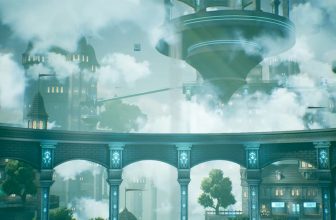
The game’s setting, known as the Wulin, is one of its most distinctive features. It uses traditional Chinese architecture, bamboo forests, ancient temples, industrial structures, and supernatural creatures.
This unusual combination gives Phantom Blade Zero an identity that separates it from conventional medieval fantasy RPGs.
However, the storytelling does not always match the quality of the world surrounding it.
The narrative unfolds through conversations, cutscenes, memories, and collectible story fragments.
While this approach adds depth to the setting, the numerous characters, unfamiliar names, and overlapping storylines can make the plot difficult to follow.
The pacing also suffers when the game interrupts action with lengthy exposition sequences.
If you enjoy piecing together a complicated mystery, you may appreciate this approach, but those looking for a straightforward revenge story might find it unnecessarily confusing.
Combat: The Game’s Biggest Strength
Combat is where Phantom Blade Zero truly shines. The game delivers fast, aggressive swordplay with martial arts choreography and the spectacular finishing moves expected from a modern action game.
Soul can switch between weapons, chain attacks, block incoming strikes, parry enemy moves, and dodge dangerous attacks.
The combat system rewards quick reactions without forcing you to rely on a single defensive technique.
The ability to block most incoming attacks makes combat more approachable than a traditional Soulslike experience.
You can study an enemy’s attack patterns while defending yourself, then look for an opportunity to counterattack.
Perfectly timed parries offer additional advantages, while attacks marked by red flashes require you to dodge rather than attempt a conventional block.
Weapon switching is another important part of the experience.
Instead of treating different weapons as simple statistical upgrades, Phantom Blade Zero gives them distinctive movesets, animations, and combat characteristics.
Switching weapons also helps replenish Soul’s Sha-Chi resource and allows you to maintain your offensive momentum.
This makes combat feel more dynamic than a conventional light-attack, heavy-attack system.
Finding the right weapon combination for a particular encounter can make a noticeable difference, especially when facing powerful enemies.
The game’s combat animations deserve praise too. Sword strikes feel fluid, finishing moves are impressively choreographed, and the transitions between attacks give battles the appearance of carefully staged martial arts sequences.
The involvement of martial arts professionals, including Donnie Yen’s creative contribution, is reflected in the game’s emphasis on movement and physical performance.
Combat is not perfect, however. The speed and visual effects can occasionally make encounters difficult to read.
Some boss battles also stretch on longer than necessary, with enemies absorbing substantial damage despite repeated successful attacks.
These moments can undermine the satisfaction of an otherwise excellent combat system.
Nevertheless, combat remains the primary reason to play Phantom Blade Zero. Few of its other systems are as consistently engaging.
Boss Fights: Spectacle Meets Skill
Boss fights are among the game’s most memorable encounters.
They frequently demand more than simply dealing damage, forcing you to recognise attack patterns, manage resources, and identify opportunities to strike.
Powerful enemies can quickly punish careless attacks, making defensive timing an essential part of the experience.
If you learn when to block, parry, dodge, and switch weapons, you will have a much easier time dealing with the more demanding encounters.
The variety of opponents also helps keep battles interesting. Different enemies require different approaches, preventing you from relying on one combination throughout the entire adventure.
Optional encounters and hidden bosses provide additional challenges if you are willing to explore beyond the main objectives.
However, the difficulty is not always balanced perfectly. Certain bosses have large health pools, and their extended encounters can become tiring.
Camera positioning can also become problematic when the action moves close to environmental obstacles.
Even with these issues, the boss encounters deliver some of the game’s strongest moments.
They demonstrate how well the combat system works when enemy design, choreography, and player skill come together.
Weapons and Progression: Plenty of Reasons to Experiment
Phantom Blade Zero offers an extensive arsenal of weapons, each designed to provide a different combat experience.
Swords, heavier blades, and unusual weapon types allow you to experiment with different approaches instead of committing to a single fighting style.
The progression system gives you reasons to keep exploring and testing new equipment.
Weapons can be upgraded, while additional abilities and combat options expand the possibilities available during encounters.
Some equipment also offers specialised advantages that can influence how you approach particular enemies.
Exploration also contributes to progression. Hidden areas, optional encounters, and side quests can reward you with valuable equipment and upgrade materials.
If you investigate surroundings instead of following the main objective immediately, you may discover useful items and challenging enemies you would otherwise miss.
The main drawback is that the sheer number of available weapons can make it difficult to decide where to invest upgrade resources.
Some weapons will naturally suit particular players better than others, and not every option will feel equally useful.
Exploration and Level Design: A Beautiful World With Limitations
The world of Phantom Blade Zero is visually impressive, with environments that have natural landscapes, dense settlements, temples, and industrial structures.
Locations such as Pangzhen have detailed architecture and secrets hidden throughout their streets.
Exploration is worthwhile because the game frequently rewards curiosity.
Optional paths can lead to equipment, resources, additional story details, and encounters that are not required to complete the main campaign.
The environments also contribute significantly to the atmosphere.
Rather than presenting a generic fantasy world, the game builds a distinctive setting around its blend of Chinese cultural influences, supernatural horror, and industrial design.
Unfortunately, the level design occasionally restricts the freedom that these environments appear to promise.
Invisible barriers can prevent you from crossing seemingly accessible terrain, while climbing and other traversal abilities work only at designated locations.
Quest objectives can also become frustrating when the correct route is not immediately obvious.
These restrictions are more noticeable because Soul is presented as an exceptionally capable martial artist.
Areas that look accessible may remain off-limits, even when reaching them seems physically plausible.
The world looks more open than it sometimes feels. Exploration remains rewarding, but its restrictions can interrupt the sense of freedom that the game’s environments initially establish.
Graphics and Art Direction: A Standout Visual Identity
Phantom Blade Zero is one of the more visually distinctive action games of 2026.
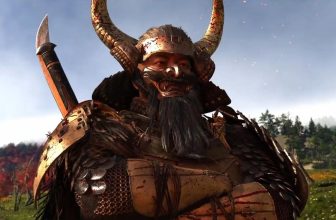
Its Unreal Engine 5 presentation has detailed environments, elaborate character designs, dramatic lighting, and fluid animations to create a convincing dark fantasy world.
However, its greatest visual achievement is not simply graphical detail. The art direction gives the game a clear identity.
Traditional Chinese architecture sits alongside industrial machinery, while peaceful natural environments contrast with grotesque creatures and violent encounters.
The setting feels familiar in certain respects but unusual in its overall execution.
Character animations are another highlight. Sword movements, acrobatic attacks, and finishing moves give battles a cinematic quality without reducing combat to a sequence of scripted events.
The visual effects accompanying special attacks also contribute to the spectacle, although they can occasionally make it harder to read what is happening during particularly chaotic fights.
Technical performance is a more complicated issue.
Some players have reported significant frame-rate drops, visual glitches, and audio inconsistencies, including problems during combat.
S-Game subsequently released a patch addressing reported issues, but whether every problem has been resolved is not clear yet.
Sound Design and Music
Sound design plays an important role in making Phantom Blade Zero’s combat feel impactful.
The sounds of blades striking opponents, weapons cutting through the air, and special attacks connecting help reinforce the physicality of each encounter.
The soundtrack complements the game’s unusual setting by combining traditional musical influences with more contemporary elements.
This reflects the same creative approach used throughout the visual design, where established wuxia traditions meet modern action and fantasy influences.
The music also helps establish atmosphere during exploration and major encounters.
When the audio, animation, and combat mechanics work together, battles become significantly more immersive.
There have been reports of audio-mixing problems in some review versions, however.
These technical issues are separate from the quality of the underlying sound design, but they can still affect the overall experience when they occur.
Difficulty and Accessibility
Phantom Blade Zero occupies an interesting position between accessible action adventures and demanding combat-focused games.
Although its boss encounters can be challenging, its defensive options give you more flexibility than many traditional Soulslike games.
Difficulty options also allow you to tailor the experience to your preferences.
If you are primarily interested in the story, you can choose a more forgiving mode, while experienced players can seek out tougher challenges.
This flexibility is important because the game places so much emphasis on learning combat mechanics.
However, the game is not equally accommodating in every area. Its accessibility options are comparatively limited, particularly when it comes to detailed controller remapping.
The fast pace of combat can also be difficult to manage for players who have trouble following rapid visual effects.
Overall, the difficulty options make the game more approachable without removing the importance of skill and timing.
Is Phantom Blade Zero a Soulslike?
Phantom Blade Zero shares some characteristics with Soulslike games, including challenging bosses, dangerous enemies, and environments that reward careful exploration.
These similarities may initially lead you to expect an experience built around the same systems as Dark Souls or Elden Ring.
That comparison only goes so far, however.
Phantom Blade Zero places much greater emphasis on fast-paced martial arts combat, elaborate weapon combinations, and continuous offensive pressure.
Its blocking system is more forgiving, and its progression and resource mechanics do not follow every convention associated with the Soulslike genre.
It is better understood as an action RPG with challenging boss encounters than as a straightforward Soulslike.
This distinction is important because expectations can influence how you approach the game.
If you are expecting a slow, methodical adventure, you may find its combat unusually aggressive, while if you are looking for a cinematic martial arts experience, you will likely appreciate its direction.
Verdict: Should You Play Phantom Blade Zero?
Phantom Blade Zero is an impressive action RPG with an identity of its own.
Its fluid combat, extensive weapon selection, memorable boss fights, and distinctive art direction make it one of the most interesting action games of 2026.
Its greatest achievement is the combat system. Weapon switching, defensive timing, spectacular animations, and varied enemy encounters combine to create battles that remain engaging throughout the adventure.
The game’s dark wuxia setting also provides a refreshing alternative to more familiar fantasy worlds.
Unfortunately, its inconsistent storytelling, restrictive exploration, and reported technical problems prevent it from reaching the same standard in every area.
The narrative can be difficult to follow, some boss encounters last longer than necessary, and technical issues can interfere with the action.
These shortcomings do not erase what Phantom Blade Zero gets right.
The core combat experience is strong enough to make the game worthwhile for players who value action, weapon variety, and challenging encounters above everything else.
TechGamesNews Rating: 8.5/10